
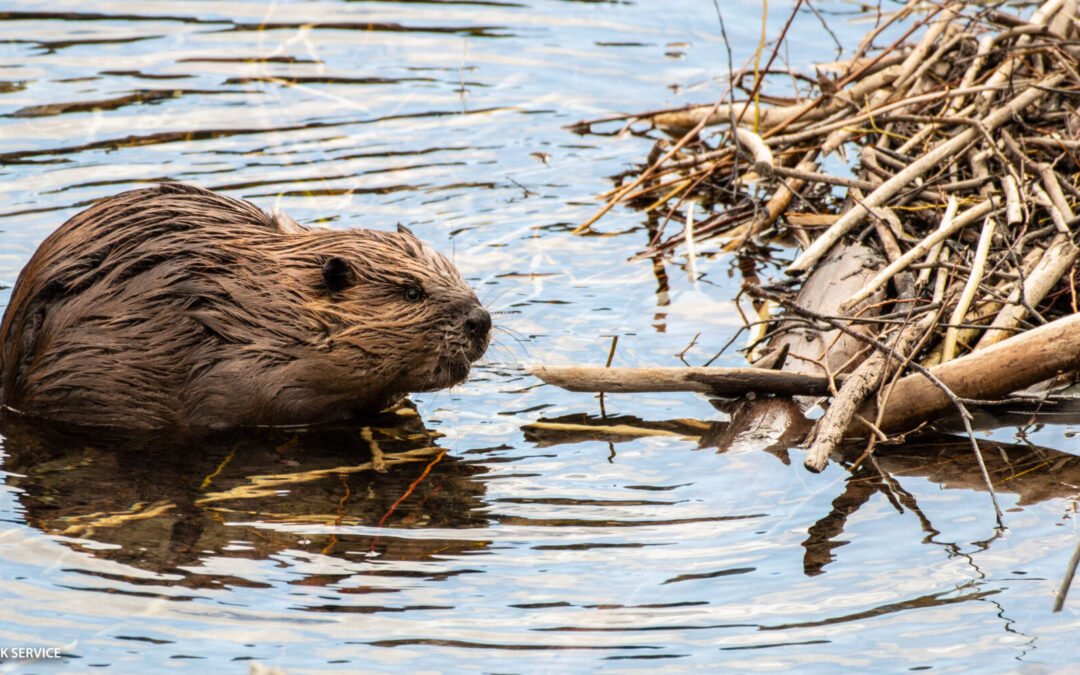
By Dreux J. Watermolen, retired ecologist
Many Wisconsin Wetlands Association members have likely encountered beavers in wetlands. These charismatic rodents occupy habitats in every county of the state and are second only to humans in their ability to transform landscapes. Some conservationists characterize beavers as “ecosystem engineers,” a perception reinforced in a symposium at the 2026 Wisconsin Wetland Science Conference as well as in recently published research. Here’s a brief overview of what we know about beavers and wetlands.
Beavers Alter Ecosystems
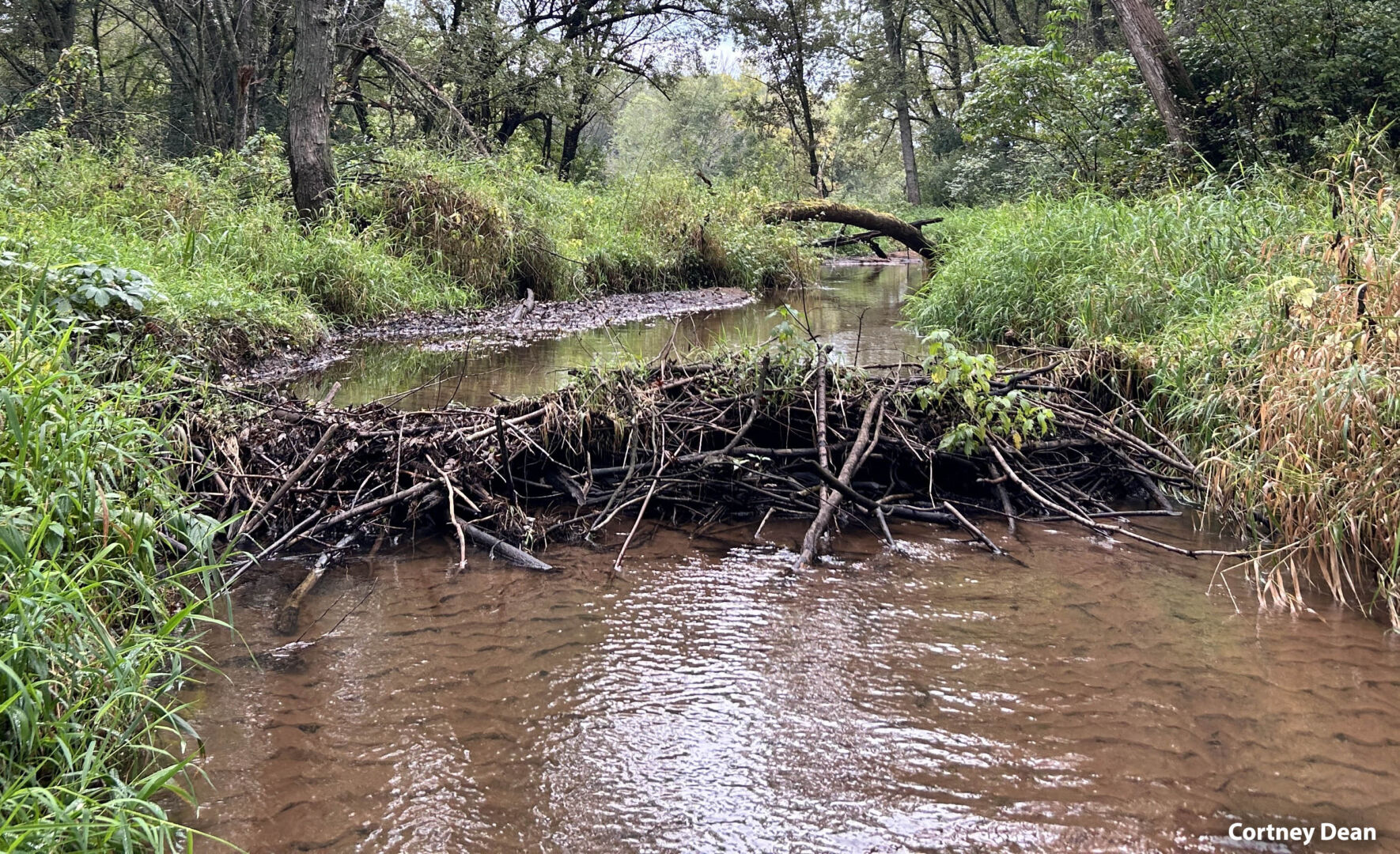
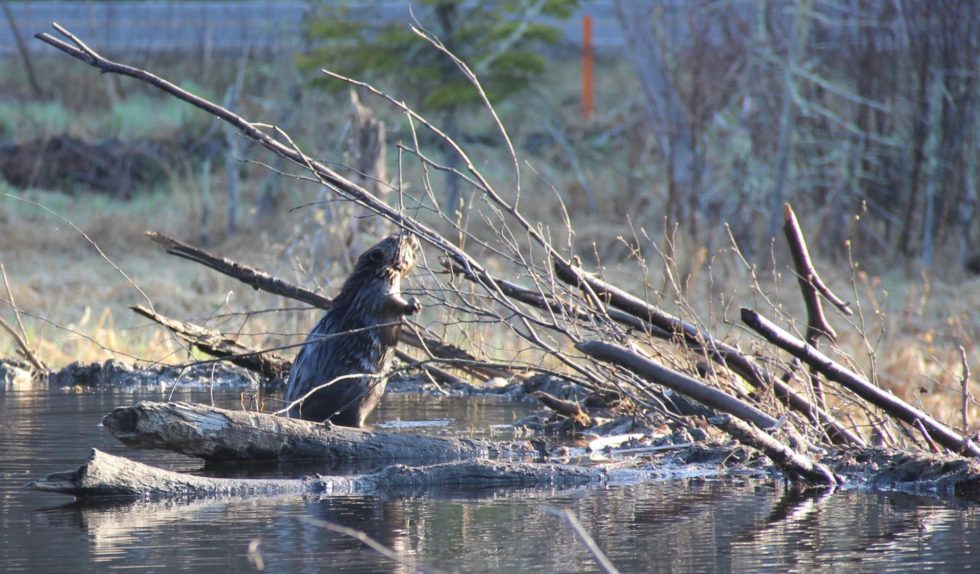
Beaver dams, like the one pictured, can expand streams into complex networks of open water, marshes, wet meadows, and flooded forests.
Beavers fundamentally alter their surrounding environment by felling trees, digging channels, and building dams and lodges. Their sophisticated construction techniques can lead to significant landscape changes. Scientists recently reported that beaver dam construction modifies water flow, increases surface and subsurface water storage, modifies nutrient cycling, and alters vegetation.
Localized flooding caused by dam construction expands riparian (streamside) zones. Beaver canals reroute the flow of waters. Together, these changes create complex networks of open water, marshes, wet meadows, and flooded forests. Scientists refer to this resulting mix as increased habitat heterogeneity.
Flooding can result in snags (standing dead trees), and felled trees can create small openings in the forest canopy. Fluctuating water levels, openings in the tree canopy, removal of woody debris, and beavers’ selective plant diet contribute to changes in the composition of local vegetation. These activities encourage a dynamic and diverse mix of fast-growing, flowering plants in habitats surrounding beaver ponds.
Many Species Benefit
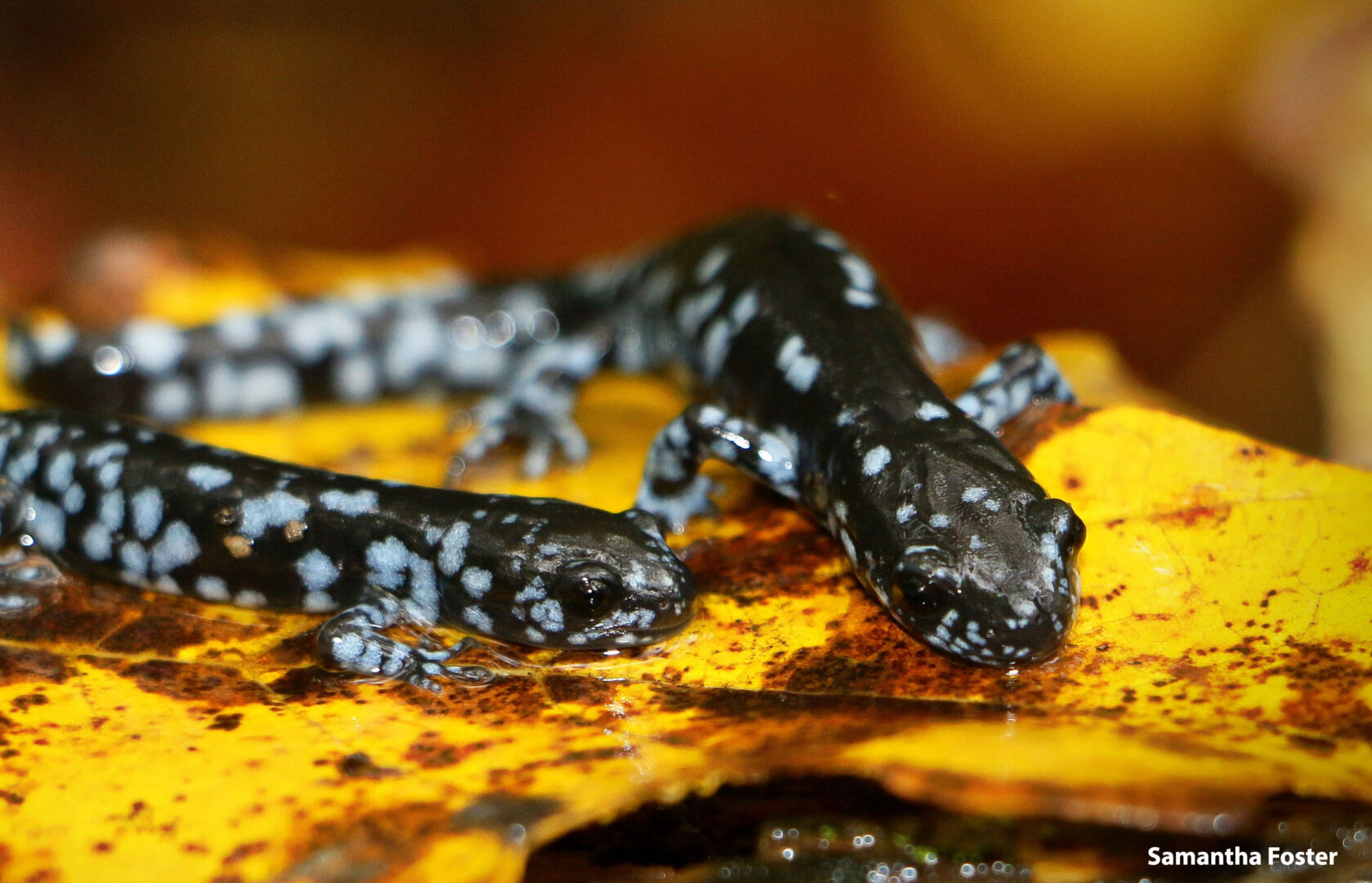
Blue-spotted salamanders are one of many amphibians that can be found in beaver-created habitat.
The varied mosaic of aquatic and terrestrial habitats created by beaver activities leads to enhanced habitat complexity, with ripple effects that support a wide array of species.
The ponds and slow-moving streams serve as important nurseries for young fish (like trout) and breeding areas for frogs and salamanders. The slowing of water creates deep, cool pools suitable for macroinvertebrates, amphibians, and native fish, and can serve as important refugia for these species during summer heatwaves and droughts.
Small mammals flock to the dense vegetation around beaver wetlands, which in turn attract raptors and other predators. A recent study demonstrated that beaver-engineered habitats support more species and greater abundances of terrestrial and semi-aquatic mammals compared to non-beaver areas. The researchers found particularly notable increases in the presence of species like moose, otters, and pine martens at their study sites.
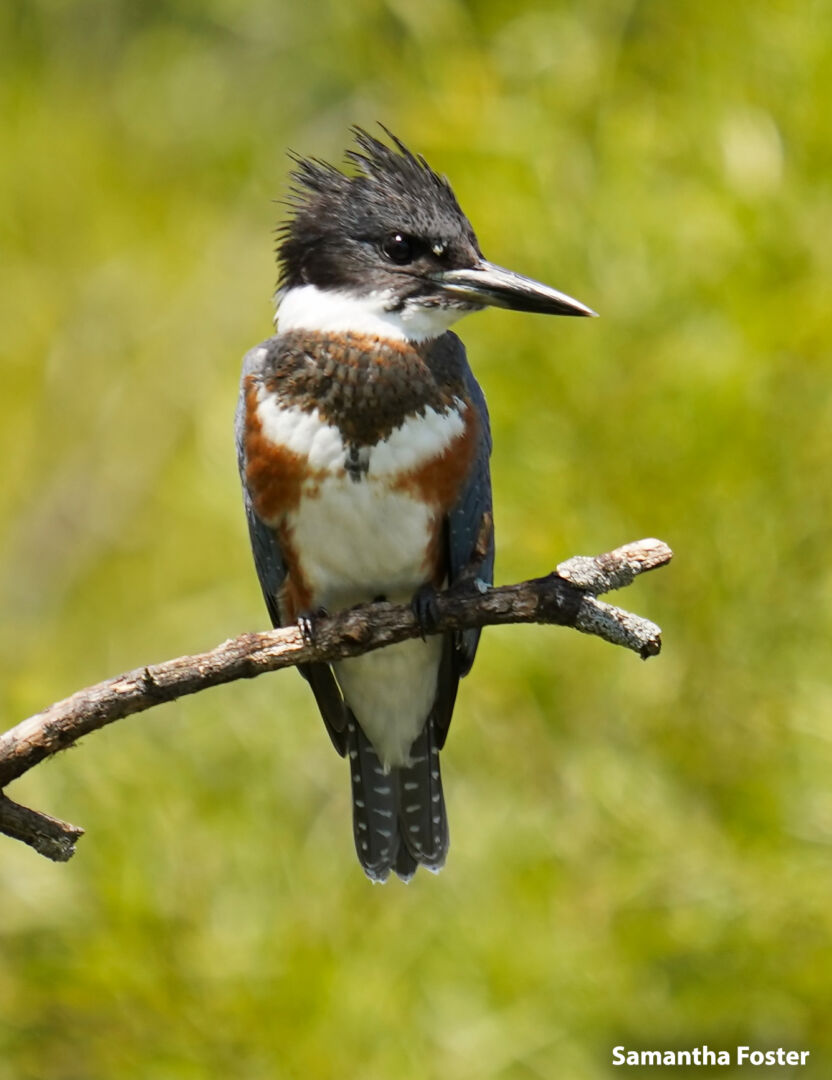
The Belted Kingfisher is just one of the birds drawn to beaver ponds for their abundant food supply and nesting sites.
Similarly, beaver ponds host a greater number of bird species and higher abundances of bats and birds compared to river and forest habitats. Herons, various ducks, kingfishers, and a multitude of songbirds are heavily drawn to the abundant food sources and nesting sites. The snags left behind by beaver flooding support primary excavators (like woodpeckers) and secondary cavity nesters (like owls), and provide ideal roosting sites for bats.
Other research shows the changes in vegetation in beaver-influenced areas also contribute to a higher diversity and abundance of invertebrates, like butterflies, moths, and other flying insects, including some rare species, and that beaver wetlands attract a greater abundance of pollinators compared to other wetlands.
Ecosystem Benefits Extend to People
Beyond directly supporting increased biodiversity, beaver wetlands provide essential “ecosystem services” that help nature (and human communities) survive environmental stressors. The waters impounded by beaver dams can help mitigate the effects of drought, attenuate peak flows during storm events, and reduce downstream flood risks.
By creating ponds and wetlands, beaver dams enhance groundwater retention, reduce stream gradient (steepness and downcutting), and trap sediments. Stored groundwater helps keep surrounding vegetation green and lush during dry spells. The damp corridors provide natural firebreaks during wildfire season. Beaver dams also act as natural filters, trapping organic matter and excess sediments and diffusing pollutants before the water moves downstream. The rich, wet soils in beaver meadows and wetlands are also highly efficient at storing carbon, helping in the ongoing fight against climate change.
Addressing Conflicts
While the benefits of beaver activities are considerable, we must also recognize that these activities sometimes bring beavers into conflict with landowners and property managers, particularly when localized flooding occurs or standing trees are harmed. The beaver symposium presentations at the 2026 Wetland Science Conference underscored the importance of addressing these conflicts when considering beaver activities in water management and restoration practices. Engaging affected stakeholders in thoughtful, science-based approaches can help us harness the ecosystem services provided by beavers while mitigating potential conflicts with these busy critters.
Related content
Beavers as restoration partners
Beaver presentations at the Wetland Coffee Break
- Coexisting with beavers to increase wetland functionality and support biodiversity
- Exploring the eco-cultural relationships of beaver and wild rice: hydrological and cultural perspectives
- The fur trade and the north woods environment
- Bioacoustic evidence that bats benefit from beaver ponds
- The influence of beaver dams on Wisconsin trout streams
- How do beavers impact water?