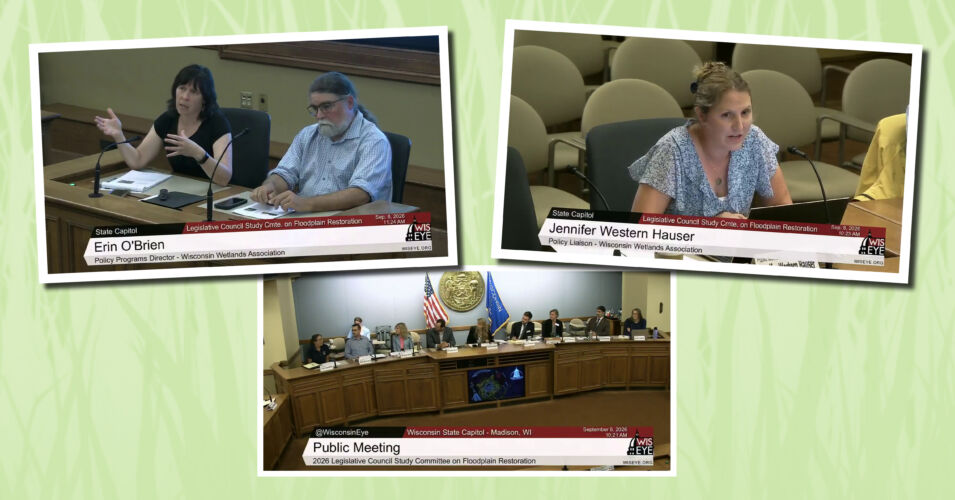
Last week, the Wisconsin State Legislature convened the first-ever Legislative Council Study Committee on Floodplain Restoration. Study Committees commence in the summer of even-numbered years and provide the chance for policymakers and citizen stakeholders to work together toward policy solutions for complex issues.
At the Wetland Science Conference and through other communications, Wisconsin Wetlands Association (WWA) has been elevating concerns about the ways that well-intended federal floodplain protection policies hinder voluntary restoration work in FEMA-mapped floodplains. We are grateful that the Legislature has selected this topic for study.
Recap of the Study Committee’s first meeting
At the first meeting of the Legislative Council Study Committee on Floodplain Restoration on September 8th, WWA’s Executive Director Tracy Hames and Policy Programs Director Erin O’Brien gave an overview on floodplains—what they are, where they can be found, how they have been altered, and the many ways they can be restored—and provided background information on the regulatory issues the restoration community has encountered.
In American Rivers’ presentation, Floodplain Director Eileen Shader provided some national context to floodplain regulations. The Wisconsin Department of Natural Resources also presented an overview of Wisconsin’s floodplain program and the importance of floodplain management. The meeting wrapped up with personal and programmatic insights from two practitioners with decades of relevant experience.
All meeting materials, including agendas, minutes, presentation slide decks, and background information, are available on the Legislative Council Committee on Floodplain Restoration’s website. You can also view a video recording of the day’s proceedings here by creating a free account. Our remarks start at the 34:44 minute mark (technically, it starts at 34:00, but there are some audio issues in the beginning).
What is the Legislative Council Study Committee on Floodplain Restoration?
This committee is focused on examining the regulatory policies that apply to voluntary projects that restore degraded floodplains. With 84,000 miles of rivers and streams, Wisconsin historically had many connected floodplains and wetlands along flat stretches of these streams. These areas can be thought of as “beads on a string” because they are places where water would have overbanked occasionally. But over time, many land use changes and alterations to our rivers have resulted in the disconnection of streams and their floodplains. When floodplains can’t flood, we lose many benefits, including slowing water down, reducing flood risks, improving water quality, providing high-quality habitat, and more.
While many opportunities exist for voluntary floodplain restoration and reconnection, barriers slow and limit this work. The Legislative Study Committee on Floodplain Restoration will be specifically examining regulatory barriers.
Scope of the Study Committee
The study committee is directed to review state and federal laws and policies impacting floodplain restoration projects in Wisconsin. The committee shall identify barriers that these laws and policies may pose to floodplain restoration projects and make recommendations for changes to Wisconsin law that reduce these barriers and that encourage best practices in floodplain restoration projects. In making its recommendations, the committee shall consider floodplain management approaches adopted in other jurisdictions. The committee may also recommend changes to state law that may be enabled by changes to federal law under the Floodplain Enhancement and Recovery Act, legislation currently pending before Congress.
The complexity of floodplain management is reflected in federal, state, and local administration of policies that were formed at a time when restoring floodplains wasn’t part of the programs’ vision or goals. While Wisconsin is not alone in recognizing these issues (many other states face similar challenges), the Floodplain Restoration Study Committee is bringing legislators and experts together to work toward policy solutions.
The committee is comprised of 13 members, including four legislators: Representative and Chair Joy Goeben, Representative Vincent Miresse, Senator and Vice Chair Romaine Quinn, and Senator Jodi Habush Sinykin. WWA’s Policy Liaison Jennifer Western Hauser also sits on the committee, with 8 other citizen members.
Future meetings of the Study Committee
The committee’s work to identify potential legislative solutions to reduce regulatory barriers to floodplain restoration will continue over the course of three additional full-day meetings on the following dates:
- September 29th, 2026
- October 27th, 2026
- December 8th, 2026
We are hopeful that the committee’s work will lead to policy reforms that help accelerate the reconnections of streams to adjacent floodplains across the state. Watch our blog and future editions of Wetland News for updates on the committee’s deliberations.
Related content
New federal legislation to enable floodplain restoration in FEMA mapped floodplains
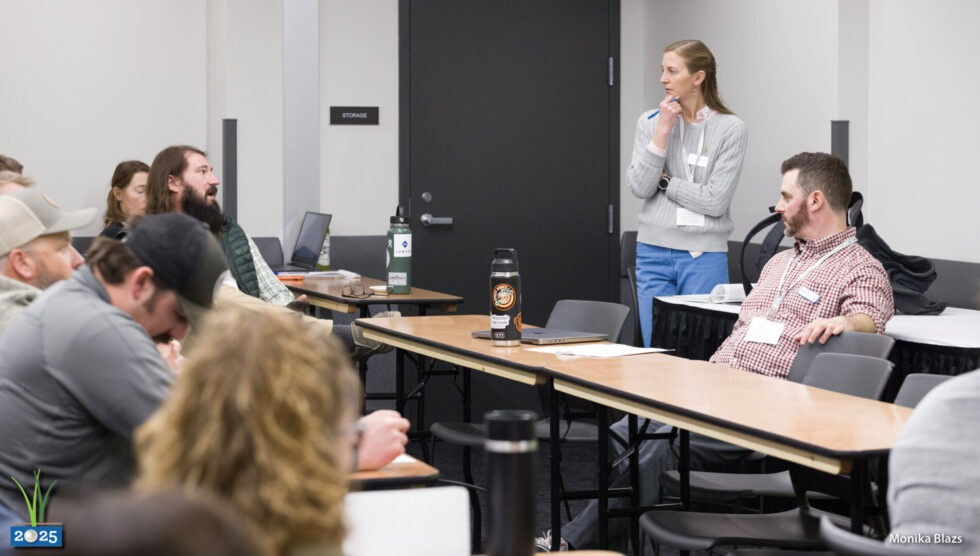
Working group at the Wetland Science Conference examines floodplain restoration permitting
What are floodplains? Managing misconceptions about healthy flooding