By Richard Staffen, Wisconsin Department of Natural Resources, Natural Heritage Conservation Zoologist
Amphibians are classified as one of the most imperiled groups of animals in the world, as 40% are at risk of extinction. In Wisconsin, they are faring better, with only one species listed as endangered or threatened. Amphibians fall into two groups: 1) salamanders and 2) frogs and toads. Wisconsin is home to a diverse mix of both, including seven salamander species and twelve frogs/toads. Wetlands play an important role in the life cycle and development of these charismatic creatures.
Salamanders are often overlooked due to their secretive nature, but they are critically important for ecosystem function and are surprisingly long-lived, with some species surviving up to 20 years in the wild. Woodland salamanders are considered among the most abundant predators of invertebrates on the forest floor, and, likewise, serve as important prey for many other vertebrates. For example, research has found eastern red-backed salamanders can occur at densities in forests greater than those of birds and mammals combined. These density levels can have impacts on litter decomposition and plant growth.
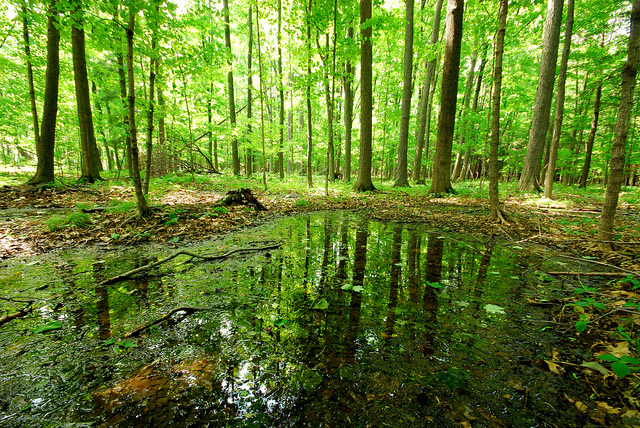
Among the most critical wetlands for woodland salamanders are ephemeral ponds, also called vernal pools. Vernal pools are seasonally flooded wetlands that are typically small and shallow. They are found in a variety of forested landscapes, including depressional wetlands in upland or lowland forests and in floodplain forests. Because they dry regularly, vernal pools are fishless, allowing them to serve as important breeding areas for several salamanders and other species without becoming fish food!
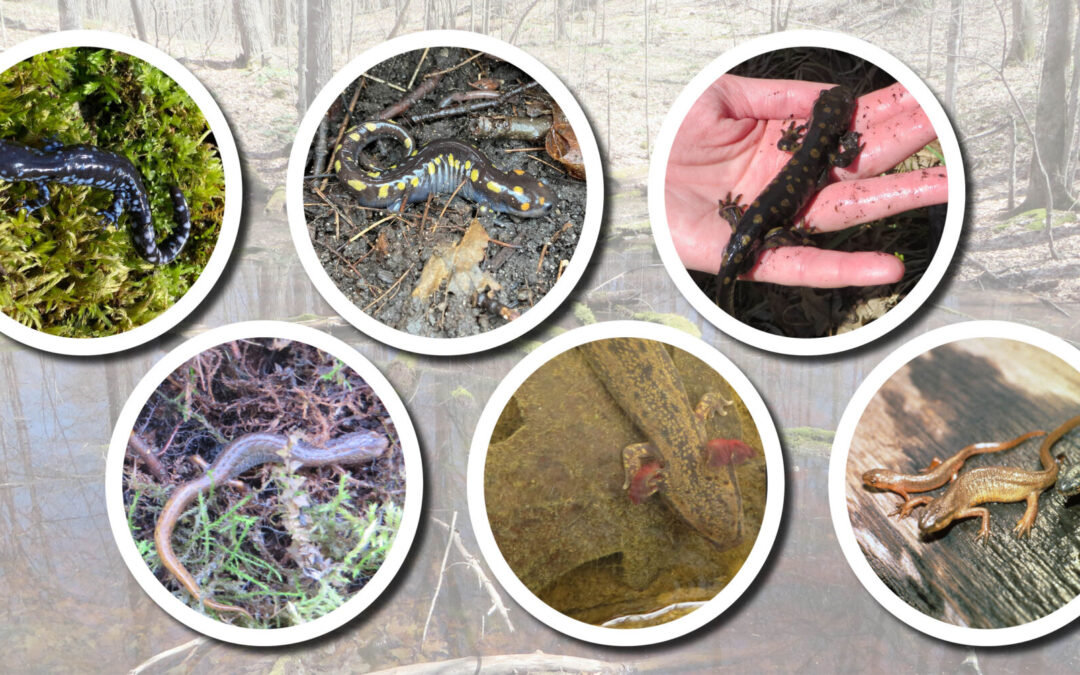
Salamanders that rely on vernal pools to reproduce include the blue-spotted salamander, spotted salamander, and eastern tiger salamander. All these species overwinter nearby, then move into the pools to breed and lay eggs early in spring after the ice thaws. The eggs hatch and larvae develop in the pools until they metamorphose to their adult, terrestrial form during the summer months.
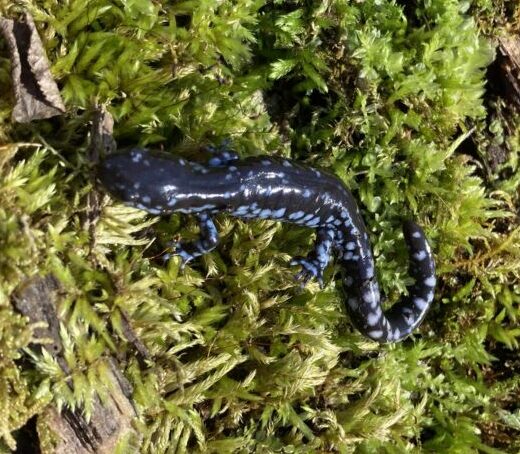
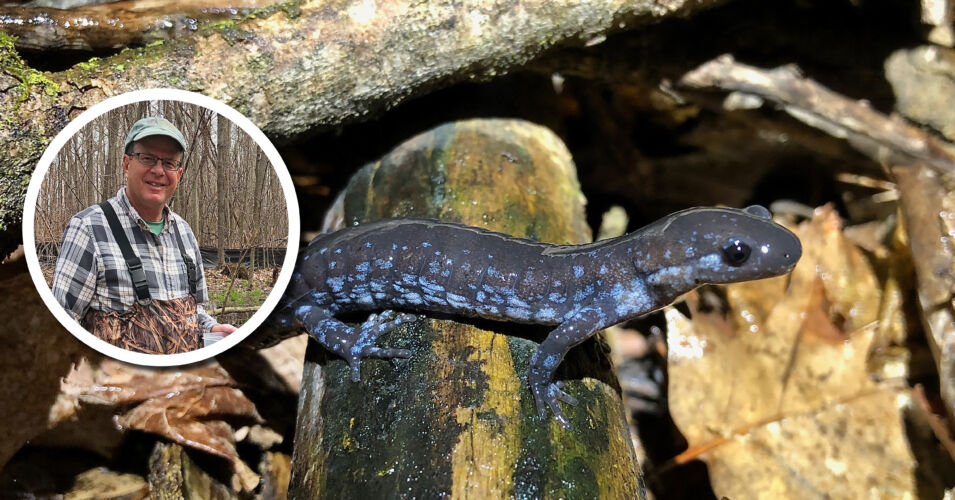
Blue-spotted salamanders are among the most numerous species in and around ponds and can lay thousands of eggs there each spring. They are found throughout most of the state, except in far southwestern Wisconsin. They are relatively easy to identify, with a dark blue or black body with scattered blue or whitish spots.
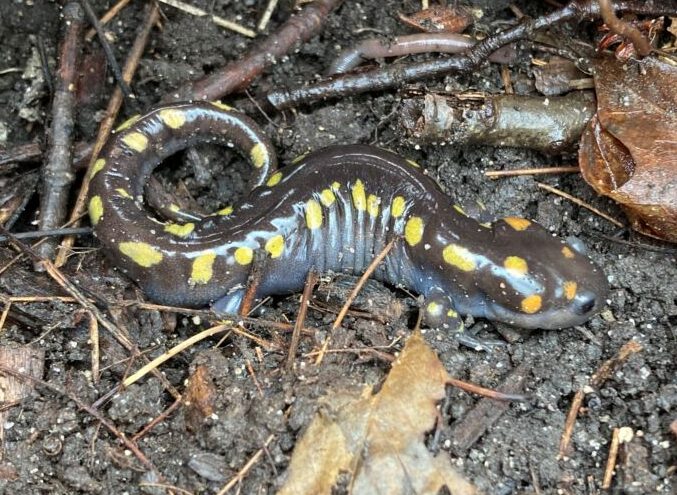
Spotted salamanders are less numerous than blue-spotted and more restricted geographically to the northern half of the state and some forests of southeast Wisconsin. Both spotted and blue-spotted salamanders spend much of their lives in forests, hidden underground in small mammal burrows or under logs and leaf litter. Spotted salamanders are larger than blue-spotted salamanders and may be confused with tiger salamanders where they overlap in range. They have dark brown or black bodies with two rows of yellow or orange spots along the back, a gray chin, and often two orange spots at the base of the head.
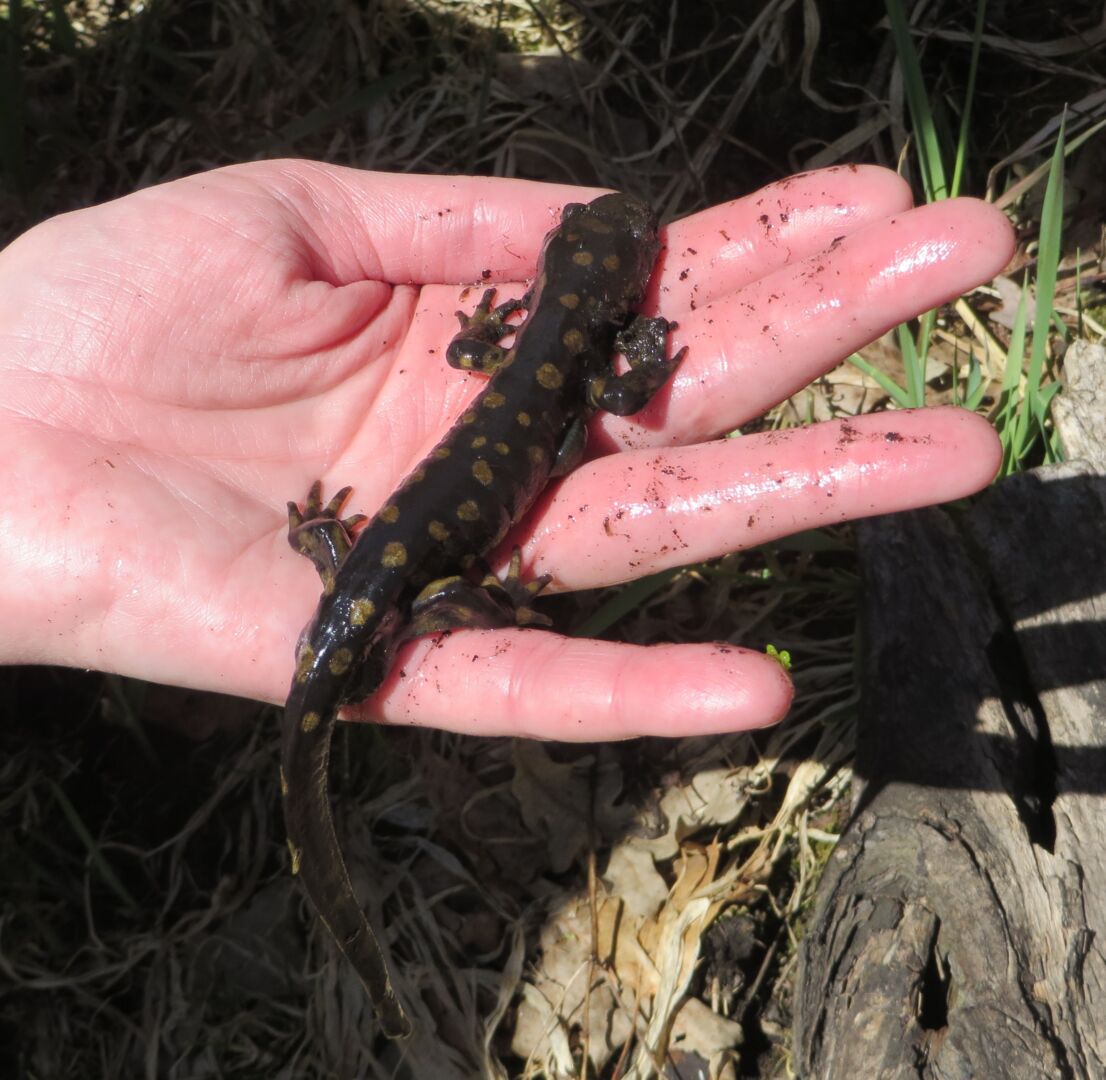
Eastern tiger salamanders are found in grasslands, open wetlands, edges of forests, and agricultural or developed areas. They have black or dark grey bodies with yellow, olive, or brownish blotches or spots scattered across their back and a yellowish lower jaw. They can be found in and around homes.
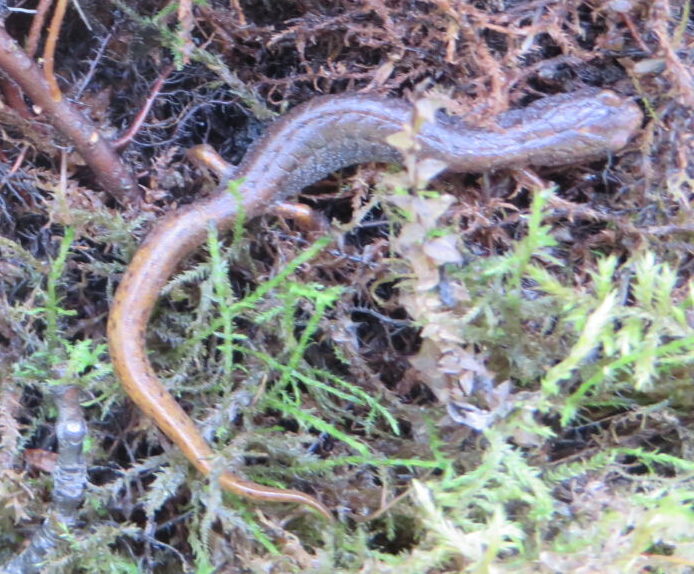
Four-toed salamanders have the unusual adaptation of placing their eggs under sphagnum moss, where the eggs develop, and then the larvae drop into the shallow water below. Adults are small and nondescript, with gray or reddish-brown bodies, but have a distinctive white belly with black spots. They have only four toes on the hind foot, which is unique for Wisconsin salamanders.
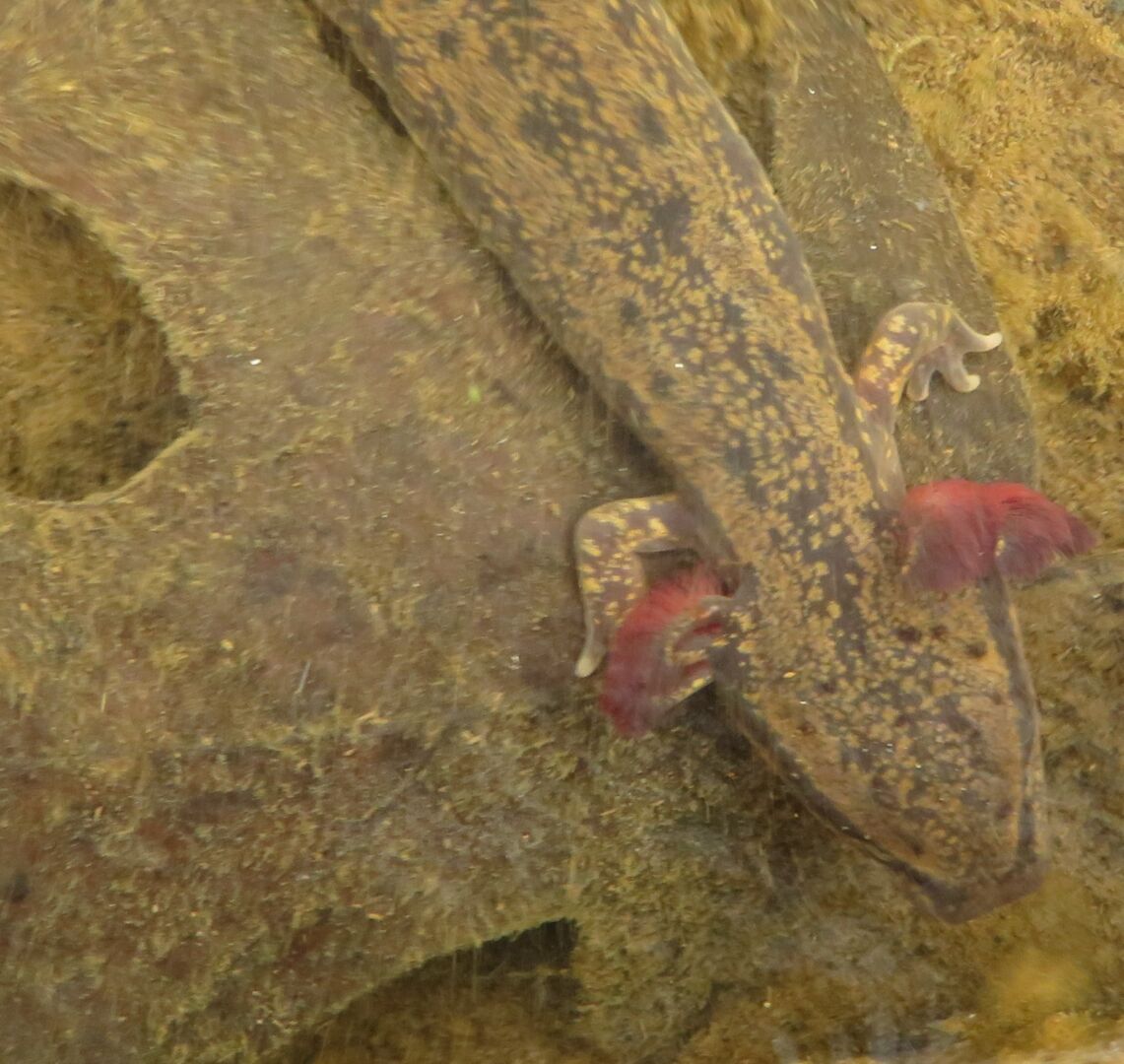
The Mudpuppy is Wisconsin’s largest salamander and is strictly aquatic, found throughout the entire state in streams, rivers, and lakes. They have red, feathery external gills that allow them to live and breathe exclusively underwater.
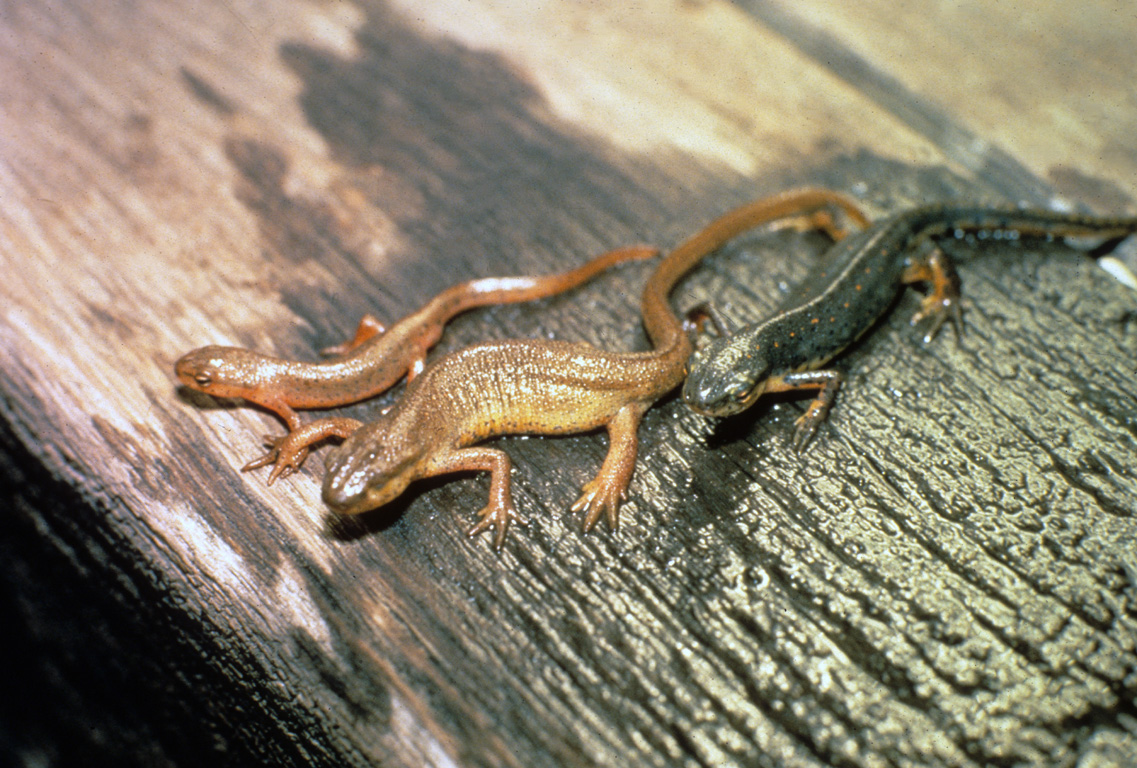
Another salamander that spends extensive time in the water is the Eastern newt. They breed, lay eggs, develop as larvae, and live much of their adult lives (including overwintering) in vegetated ponds, lakes, wetlands, and sloughs. If the waterbody dries out or resources are depleted, newts can leave the water during a terrestrial “eft” (juvenile) phase, where they can live for years on land.
Wisconsin’s seventh salamander species, the eastern red-backed salamander, is entirely terrestrial. Learn more about Wisconsin’s salamanders by searching for “Amphibians or Herps of Wisconsin” at dnr.wisconsin.gov.
Photos by Richard Staffen: Blue-spotted salamander, spotted salamander, eastern tiger salamander, four-toed salamander. Photo courtesy WDNR: Eastern Newt. Photo by Rori Paloksi: Mudpuppy.
Related content
Wetland Coffee Break: All-female salamanders “rule” an ephemeral pond