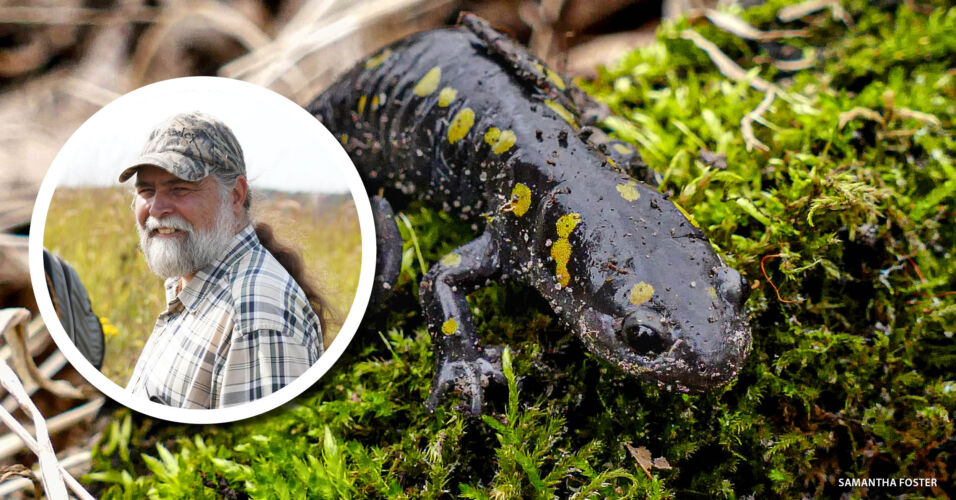
Reading about Wisconsin’s salamanders in the latest newsletter brought me back to my childhood. Like many of us who had the privilege of unsupervised exploration within our neighborhood environments, every now and then, my friends and I would search nearby window wells for trapped wildlife. We’d mostly find frogs and toads that wandered into the deep wells and couldn’t find their way out, setting free the living ones and examining the dried carcasses we did not discover in time. Though finding frogs and toads was neat, the real prizes were the occasional salamanders. We called them tiger salamanders, and, incredibly, according to our article, it looks like we were correct. They were prized because they were mysterious creatures that five-year-olds did not encounter very often. We wondered where they came from, we wondered why they ended up in window wells, and we wondered whether they would bite our fingers.
Wonder is an important word. I talk about wonder a lot in these columns (no apologies). When you’re a five-year-old, everything is new, and your sense of wonder is at its peak. As we age, I don’t think the experience of wonder necessarily lessens, but it does mature. Our early years are filled with the joy of discovery. But, as we grow older, and even for those of us who spend our professional lives getting our feet wet in wetlands, sometimes what once brought wonder can turn to routine. One way to fight this ennui is to hold on to the idea that, the more we learn, the more remains unseen and yet to be discovered. Kinda like salamanders, you must seek out the unseen to see them.
So don’t be afraid to hold on to that childlike wonder. A good way to retain your wonder is to get out in the mud frequently; maybe try searching for salamanders or whatever else fuels that fire. And as you make new discoveries, share them with others, like at our annual Wetland Science Conference or at one of our Wetland Community Gatherings being held across the state in 2026. When we share our wonders, our passions, and our discoveries with others, the ensuing discussions turn into new insights that help us better protect and care for wetlands. Wonder is contagious, wonder brings people together, and wonder makes things better.
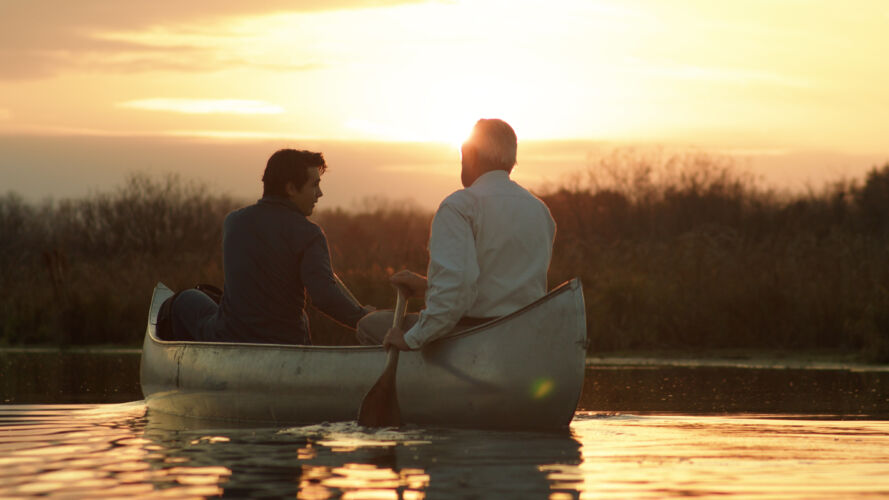
And while we’re on the subject of wonder, I’m excited to announce that a film we aired at the 2025 Wetland Science Conference, An Invitation to Wonder, has been accepted for distribution nationally through the Public Broadcasting System (PBS). This film features long-time Wisconsin Wetlands Association leader, Cal DeWitt, and the area near and dear to his heart, Waubesa Wetlands in Dane County. Cal’s grandson and filmmaker, Ben Albert, invites you to join his own journey of wonder as he re-discovers Waubesa through his camera lens and through his relationship with his grandfather.
We are proud to be sponsoring the national distribution of this beautiful exploration into wonder. The film started airing on PBS stations across the country in April—check your location station guide, or, if you are a member of PBS, you can stream it online now at pbs.org.
Related content
Unique wetlands serve a critical role for Wisconsin salamanders
Local film about Waubesa Wetlands airs on national PBS!