Wetland Coffee Break
The Wetland Coffee Break series helps keep our community of wetland lovers connected and learning about wetlands throughout the year, from anywhere! Bring your coffee and learn about wetlands, the plants and animals that call them home, and the many natural benefits they provide to our communities. Sessions are held on Zoom and feature time for audience Q&A.
See below for a list of upcoming presentations and to register. Once you register, you’ll receive an automatic email including the URL link and password you’ll need to access the meeting. We record and post each presentation so you can watch any that you missed live. You’ll find links to these recordings below, and you can also find them on our Facebook page.
We are grateful to all of the presenters for sharing their knowledge and expertise and to everyone interested in learning more about wetlands! If you are interested in giving a Wetland Coffee Break presentation, or if you have a wetland topic you’d like to see covered, please contact Katie.Beilfuss@wisconsinwetlands.org.
We are now able to provide attendance verification to Wetland Coffee Break audience members who attend the live sessions and request this service. We created this mechanism in response to requests from members of the Wetland Coffee Break audience who would like to apply their Wetland Coffee Break learning to their continuing education or certification requirements. Learn more about how to receive attendance verification here.
Register for a Wetland Coffee Break
Reciprocity on the St. Louis River estuary
Drew Harry, Emmons & Olivier Resource, Inc.
Friday, November 20, 2026
10:30 am CT
Description
Come learn about the plant communities and restoration efforts on the Minnesota side of the St. Louis River estuary, near Duluth, Minnesota–in both qualitative and quantitative detail. In partnership with the Minnesota Department of Natural Resources through a Great Lakes Restoration Initiative grant, EOR ecologists Jimmy Marty and Drew Harry surveyed eleven sites on the estuary for invasive species and floristic quality. In his presentation, Drew aims to capture the spirit of those sites—near and dear to interstate supporters—and to detail plans and results from restoration actions.
Drew Harry is an ecologist for EOR in Madison. He spent nearly a decade with the Southern Wisconsin Bird Alliance working on prairie restoration, and he’s fascinated by plants, birds, and data. Follow some of those data dives here.
An introduction to the bryophytes of Wisconsin fens and swamps
Keir Wefferling, UW-Green Bay
Friday, December 18, 2026
10:30 am CT
Description
Join Keir Wefferling from the herbarium at UW Green Bay to get an introduction to the most common and abundant bryophytes (mosses and liverworts) of Wisconsin fens. Keir will cover bryophyte life history, then dive into a review of the most easily field-identifiable species that we commonly encounter in western Great Lakes minerotrophic peatlands, including Boreal Rich Fens and Northern Wet-mesic Forests. Keir will also provide a brief summary of the bryophyte and vascular plants floristic quality assessments that he and his team have been performing in Wisconsin wetlands over the last several years.
Dr. Keir Wefferling is Curator of the Gary A. Fewless Herbarium in the Cofrin Center for Biodiversity and Associate Professor of Biology at University of Wisconsin, Green Bay. He studied phylogenetics, cytogeography, and phylogeography of flowering plants and ferns before (re)finding peatland bryophytes, such as Sphagnum, “brown mosses,” and liverworts. He now spends most of his research time in fens and swamps and at the microscope, collaborating with students, the public, and regional conservation partners.
Why peatlands matter
Dominic Uhelski, Wisconsin Wetlands Assocciation
Friday, January 22, 2027
10:30 am CT
Description
Join Wisconsin Wetlands Association’s Dominic Uhelski as he introduces you to peatlands, a unique type of wetland. Often called bogs, but also fens, mires, or moors, peatlands are little-known champions in the wetland world. Peatlands are super-sponges for water, super-filters of pollution, and super-stores of carbon, while also hosting many specialized plants, animals, and curiosities, from carnivorous plants to ancient bog bodies preserved in peat! Learn about peatlands in Wisconsin from our newest staff member.
Dominic Uhelski is a peatland specialist and lover of nature and all places wet and wonderful. Having studied peatlands for nearly nine years in four states, one territory, and two countries, his focus is on finding opportunities to better manage and restore these precious ecosystems. He joined Wisconsin Wetlands Association’s staff in 2026 as Peatlands Project Manager.
Watch previous presentations
Click “Older Entries” below to see more past presentations, or view our Google Sheet index of past presentations here.
Wetland Coffee Break: How you can help gather better information about rainfall and runoff through the “CoCoRaHS” program
Having accurate and local rainfall data impacts forecast accuracy and issue and timely and accurate flood watches and warnings. Local rainfall data also improves the modeling that communities use in their emergency management and restoration planning.
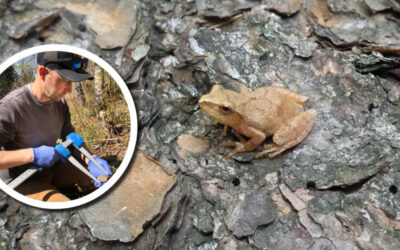
Wetland Coffee Break: The Wisconsin Frog & Toad Survey
Join DNR conservation biologist Andrew Badje to learn more about how you can become a “frogger” by lending your ears to monitor and help conserve frogs and toads in all corners of Wisconsin.
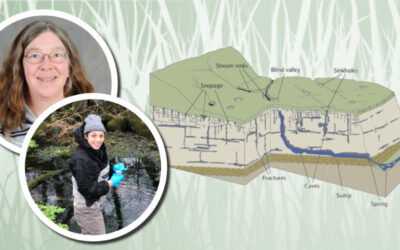
Wetland Coffee Break: Karst hydrogeology & wetlands
Have you ever heard of “karst”? Hydrogeologist Maureen Muldoon will provide an introduction to the hydrogeology of Wisconsin’s karst landscapes. Geologist Grace Graham will talk about the relationship between karst springs and wetlands.
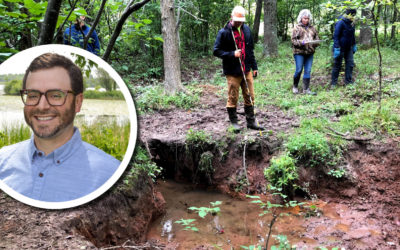
Wetland Coffee Break: Piloting natural flood management in the Lake Superior basin
Kyle will provide an overview of a natural flood management initiative in the Lake Superior Basin aiming to reduce flood risks and create climate-resilient infrastructure.
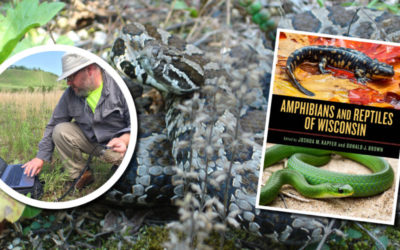
Wetland Coffee Break: Amphibians and reptiles of Wisconsin
Dr. Joshua Kapfer is co-author of the recently-published volume “Amphibian and Reptiles of Wisconsin,” assembled by an expert team of editors and contributors. Learn more about the information in this new book and hear stories about some of the amphibians and reptiles it describes.
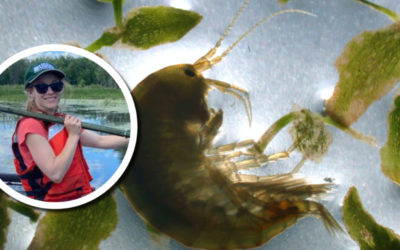
Wetland Coffee Break: Restoring wetland amphipods to revive wetland habitats
Amphipods are important wetland invertebrates that indicate water quality and healthy aquatic plant habitats and are a key food for waterfowl.