Wisconsin Wetlands Association (WWA) is the first (and still largest) state-based wetland conservation organization in the nation, and as such, our achievements and approach have been held up as a model for other states to emulate for many years. We’re emulated not just for being the first or the largest, but because our wetland policy initiatives get results and our messages about protecting and restoring wetlands to solve problems make sense to diverse audiences.
The spotlight on our achievements has intensified thanks to a difficult federal policy environment. With little immediate opportunity to advance proactive environmental legislation at the federal level, the national water conservation community— organizations and funders alike—has increased support for state-based initiatives and collaborations.
With more than 50 years of experience and a string of recent policy successes, WWA is well-positioned to meet this moment. Read on for details about several exciting new collaborations, and click here to read about the WWA policy staff who co-presented with national organizations at multiple national conferences this spring.
Wisconsin Wetlands Association launches several collaborations with national organizations
WWA has received seed funding from American Rivers to expand our efforts to improve policy and program supports for floodplain restoration in Wisconsin. The support is part of American River’s efforts to advance a 50 State Integrated Floodplain Management Strategy. This partnership first blossomed after collaborating with American Rivers staff on a hydrologic restoration symposium and a working group on regulatory challenges at WWA’s 2025 Wetland Science Conference in La Crosse.
At the 2026 Wetland Science Conference, we collaborated with The Pew Charitable Trusts (Pew) to facilitate a working group that explored the potential development of a Wisconsin-based peatlands conservation initiative focused on promoting peatlands as natural carbon sinks and climate resilient assets. The session was well attended and generated significant interest in future collaborations. This prompted WWA and Pew to submit a proposal seeking seed money to launch a pilot peatlands project in the Lake Michigan Basin.

The 2023 Supreme Court decision Sackett vs EPA spurred a flurry of campaigns to develop state-based protections for “non-federal” wetlands (wetlands deemed to not fall under US EPA’s jurisdiction). Though Wisconsin established protections for non-federal wetlands in 2001, the need to educate policymakers and other key audiences about the benefits of protecting and restoring wetlands persists. That’s why we’ve accepted a small award from the National Wildlife Federation’s Protect Our Waters campaign to facilitate a cohort of seven state-based entities to collaborate on wetland storytelling and legislator education.
Related content
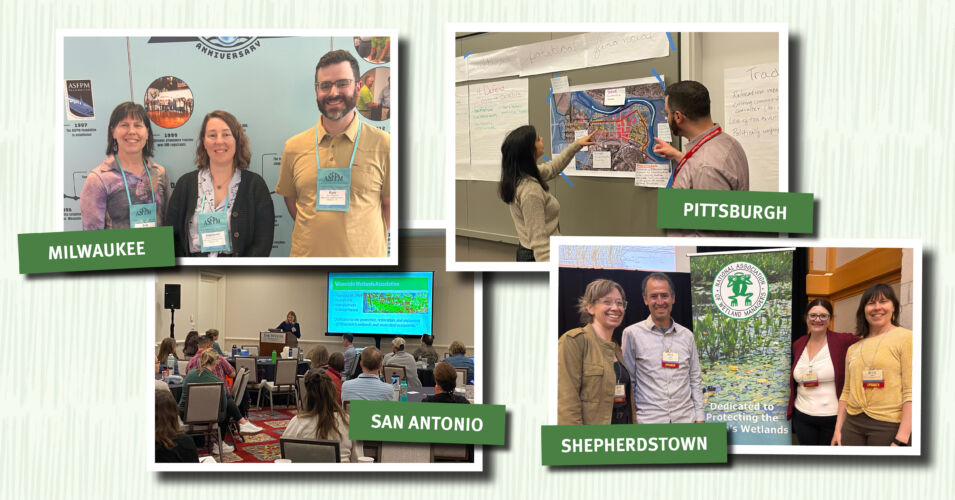
Wisconsin Wetlands Association invited to serve on expert panels at multiple national conferences
Organizers of these panels contacted WWA because the work we’re doing is game-changing.
Wetland Coffee Break: Wisconsin’s peatlands: Carbon powerhouses for climate action
From the Director: Diverse doesn’t have to mean divisive