When we give updates on our South Shore Flood Resilience Assessment project, it’s impossible not to mention our many wonderful partners. We can’t do the work to ensure communities have safe, resilient infrastructure and connected streams and wetlands by ourselves.
That’s why one of the main objectives of the South Shore project is to build capacity—both for ourselves at Wisconsin Wetlands Association (WWA) and for the communities and partners across the Lake Superior region. This type of community-based project will only successfully work if there are local organizations to carry it forward.
We thought you’d like to know a little bit more about the partners working with us on the South Shore project. First up, let’s get to know the Superior Rivers Watershed Association (SRWA).
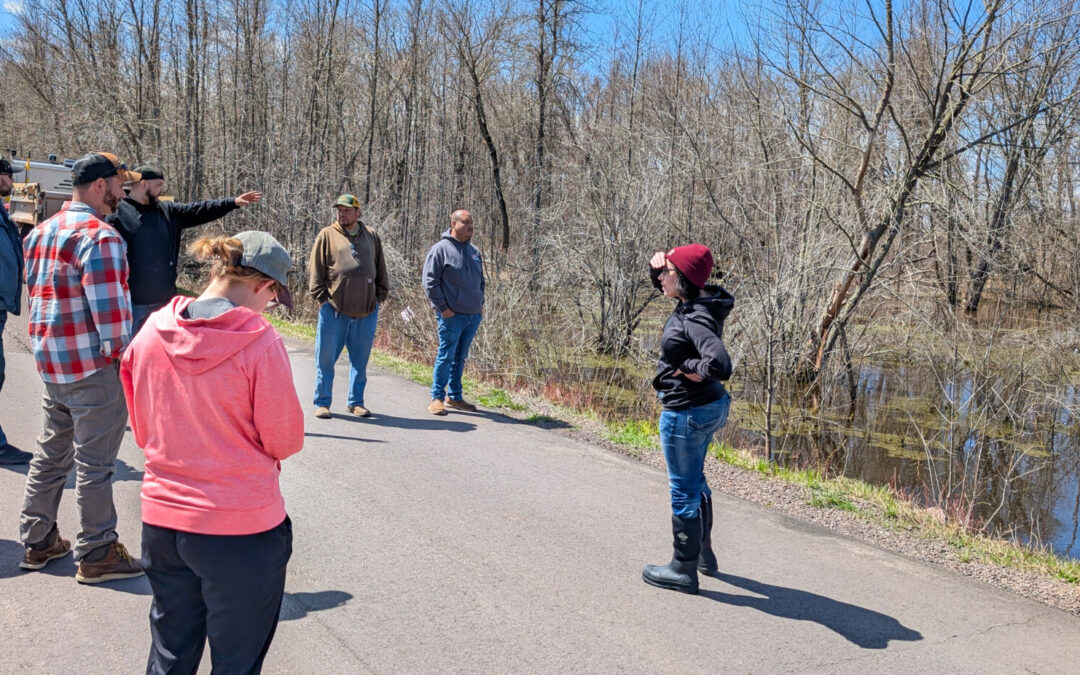
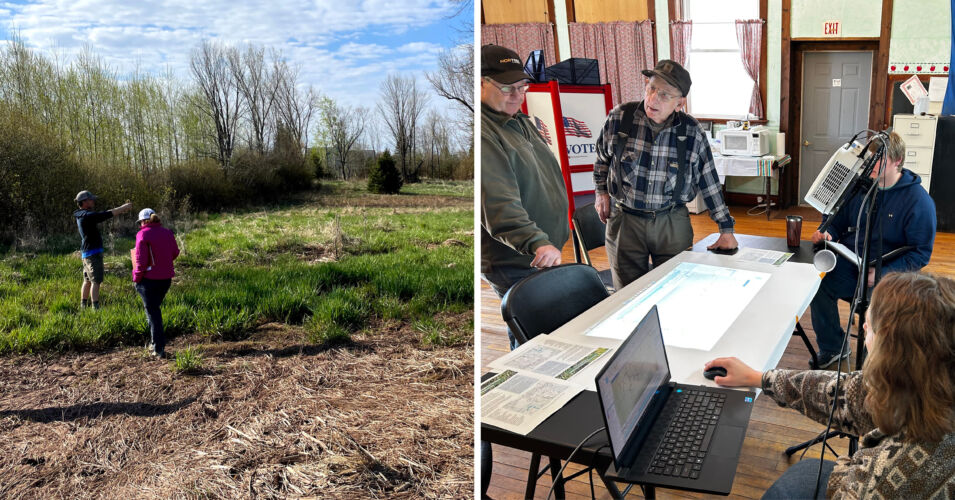
Above Photo: Superior Rivers Watershed Association’s Executive Director Alex Faber (right, red hat) along with Wisconsin Wetlands Association and staff from Mashkiiziibii, Town of Sanborn, and Bureau of Indian Affairs came together to discuss flooding, wetlands, and vulnerable road-stream crossings in the White River Watershed.
Who and what is the SRWA's role in the world?
SRWA is a non-profit organization based in Ashland, Wisconsin that engages citizens of the Chequamegon Bay watersheds as stewards to promote and protect clean water resources in Wisconsin’s Lake Superior Basin. A major part of their programming is a volunteer network that collects water chemistry and macroinvertebrate data in local rivers and streams. They have nearly 25 years of data!
Learn more about the organization’s history, projects, and programs on their website.
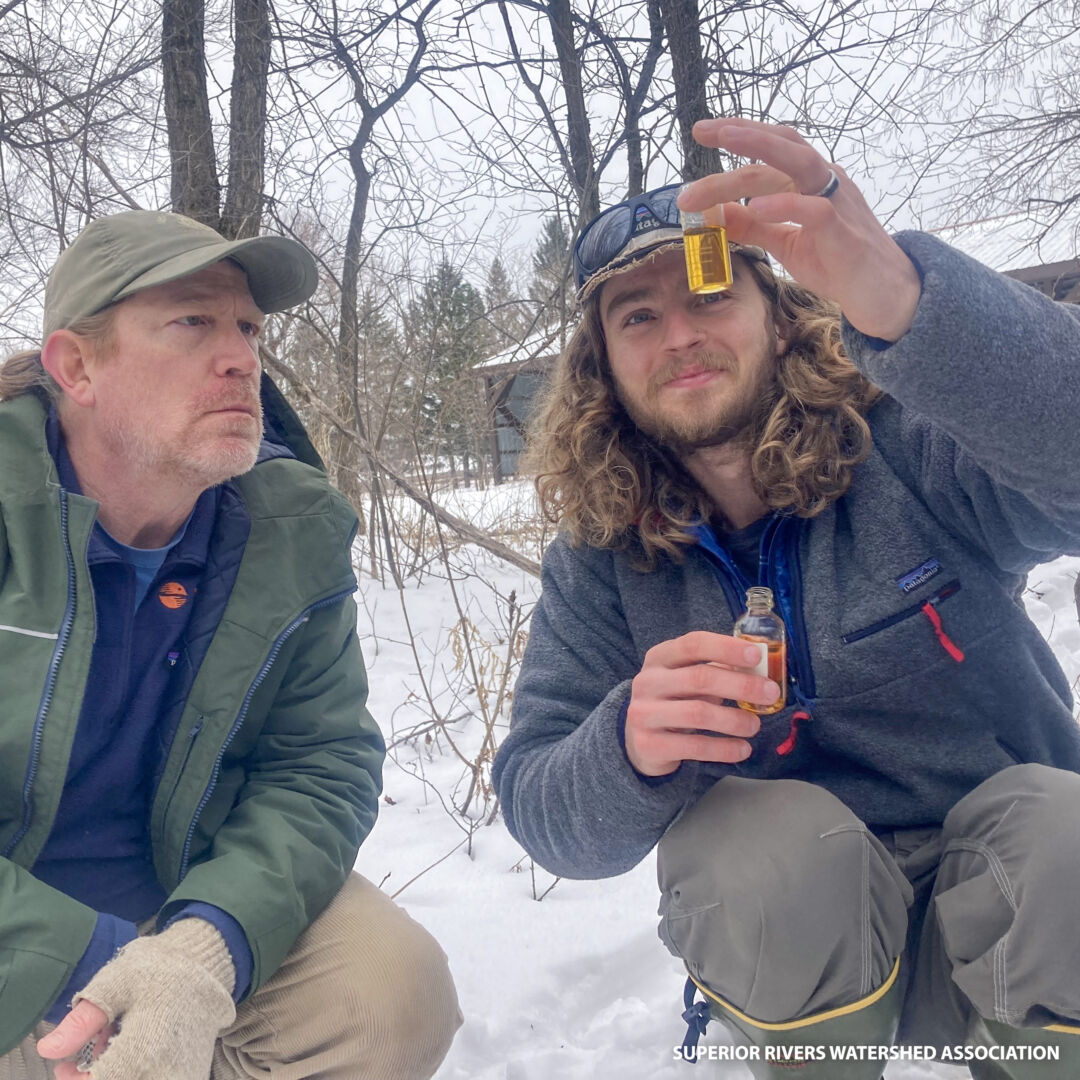
Water Quality Coordinator Will Kendall (right) with a water sample.
How do wetlands fit into SRWA’s mission?
Wetlands are an important part of a healthy watershed ecosystem. While SRWA focuses primarily on streams and rivers, many of these waterbodies are intricately connected with wetlands, and wetlands are key to keeping them healthy for all communities.
Why was SRWA chosen as a partner in the South Shore Flood Resilience Assessment?
SRWA is based in and has existing networks throughout Chequamegon Bay and the South Shore project area, so they play an important role as a community liaison for the Fish Creek and White River Watersheds.
They co-lead with WWA on project-wide communications, and they play an important role as technical support with the GIS mapping team. Additionally, SRWA helps gather knowledge, share information, and connect with those who should be involved in the project.
What are some highlights of the SRWA's involvement in the South Shore project so far?
SRWA is excited to be in on the ground floor of the assessment process, right from the beginning. Kevin Brewster, SRWA’s restoration coordinator, worked closely with WWA during the previous Marengo River Watershed assessment work in tandem with their work on the Marengo River Watershed 9Key Element Plan, so the South Shore project is a natural extension of that work.
A highlight for SRWA was joining South Shore project partners as well as Ojibwe representatives and the Great Lakes Indian Fish and Wildlife Commission for the Nibi Relationship Plan workshop last year (nibi is the Ojibwemowin word for water). “Exploring how we are in relation to water as a community or an entity is like a breath of fresh air,” said SRWA’s Executive Director, Alex Faber.
Read more about the Nibi Relationship Plan workshop in our previous project update here.
What are the SRWA excited about for this project and beyond?
SRWA is excited for the connections they’ll make with local townships, to meet people where they’re at and learn what matters most to them related to flood resilience. SRWA had previous experience with many townships in the region working on culvert projects, but most of the current staff weren’t a part of that work.
“We’re excited to lay the groundwork for support for our watershed health in these communities,” continued Alex Faber.
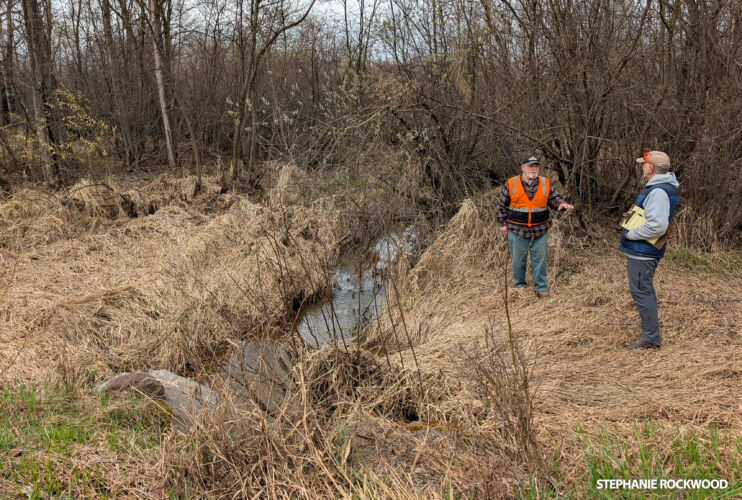
Kevin Brewster, restoration coordinator, discussing vulnerable roads and culverts with Dan Vaillaincourt, Town of Lincoln.
Superior Rivers Watershed Association continues to be an amazing local partner to WWA in this project, and to other Lake Superior Collaborative partners doing great conservation work in the region.
Related content
$1.45 million awarded in highly competitive grant to increase climate resilience in flood-prone Lake Superior communities
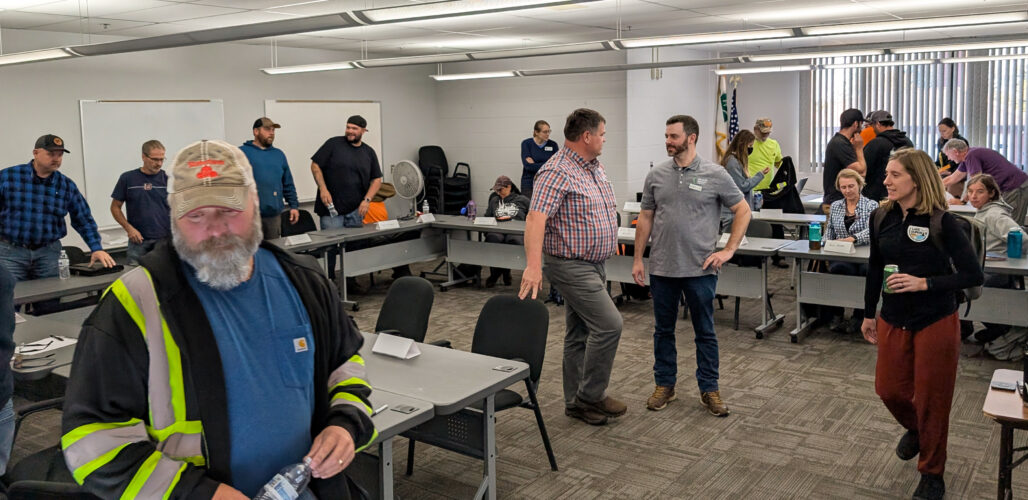
Lake Superior communities gathered to discuss culverts and slow the flow opportunities
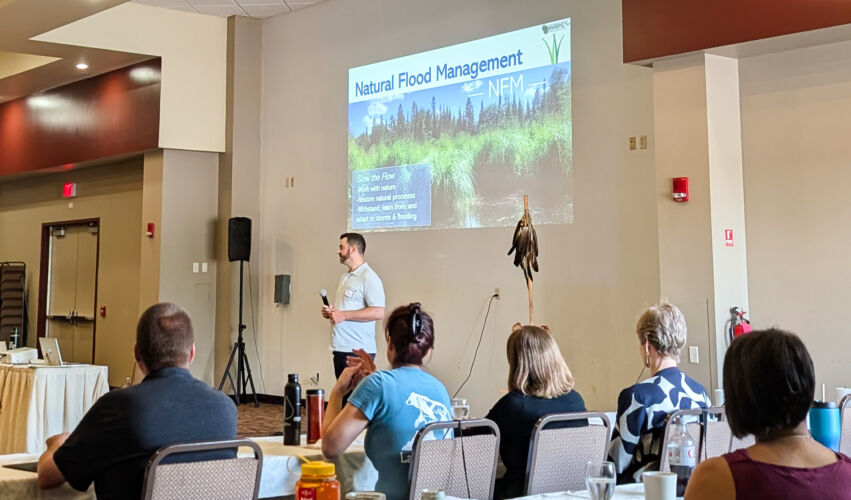
Update from the South Shore Flood Resilience Assessment project team