Wetland Coffee Break
The Wetland Coffee Break series helps keep our community of wetland lovers connected and learning about wetlands throughout the year, from anywhere! Bring your coffee and learn about wetlands, the plants and animals that call them home, and the many natural benefits they provide to our communities. Sessions are held on Zoom and feature time for audience Q&A.
See below for a list of upcoming presentations and to register. Once you register, you’ll receive an automatic email including the URL link and password you’ll need to access the meeting. We record and post each presentation so you can watch any that you missed live. You’ll find links to these recordings below, and you can also find them on our Facebook page.
We are grateful to all of the presenters for sharing their knowledge and expertise and to everyone interested in learning more about wetlands! If you are interested in giving a Wetland Coffee Break presentation, or if you have a wetland topic you’d like to see covered, please contact Katie.Beilfuss@wisconsinwetlands.org.
We are now able to provide attendance verification to Wetland Coffee Break audience members who attend the live sessions and request this service. We created this mechanism in response to requests from members of the Wetland Coffee Break audience who would like to apply their Wetland Coffee Break learning to their continuing education or certification requirements. Learn more about how to receive attendance verification here.
Register for a Wetland Coffee Break
Science to the Sidewalk: Relational care of people and nature
Kristen Voorhies, Greenlight Nature Lab for People and Places, LLC
Friday, September 18, 2026
10:30 am CT
Description
Advancing hydrologic connectivity in Dane County, WI
James Brodzeller, Dane County Land & Water Resources Department
Friday, October 2, 2026
10:30 am CT
Description
What does Soil Health have to do with wetlands anyway?
Randy Zogbaum, Wisconsin Department of Agriculture, Trade, and Consumer Protection (DATCP)
Friday, November 6, 2026
10:30 am CT
Description
This presentation will explore how land use, in particular agricultural land use, impacts soil and soil health in and around wetlands. We will discuss what is soil, what is soil health, and how implementing soil health principles protects and enhances wetlands.
Randy Zogbaum has worked as a soil scientist and educator in a variety of roles serving Wisconsin agriculture focusing on the connection of soil and water quality. He currently serves as the Soil Health Program Manager at DATCP.
Reciprocity on the St. Louis River estuary
Drew Harry, Emmons & Olivier Resource, Inc.
Friday, November 20, 2026
10:30 am CT
Description
An introduction to the bryophytes of Wisconsin fens and swamps
Keir Wefferling, UW-Green Bay
Friday, December 18, 2026
10:30 am CT
Description
Join Keir Wefferling from the herbarium at UW Green Bay to get an introduction to the most common and abundant bryophytes (mosses and liverworts) of Wisconsin fens. Keir will cover bryophyte life history, then dive into a review of the most easily field-identifiable species that we commonly encounter in western Great Lakes minerotrophic peatlands, including Boreal Rich Fens and Northern Wet-mesic Forests. Keir will also provide a brief summary of the bryophyte and vascular plants floristic quality assessments that he and his team have been performing in Wisconsin wetlands over the last several years.
Dr. Keir Wefferling is Curator of the Gary A. Fewless Herbarium in the Cofrin Center for Biodiversity and Associate Professor of Biology at University of Wisconsin, Green Bay. He studied phylogenetics, cytogeography, and phylogeography of flowering plants and ferns before (re)finding peatland bryophytes, such as Sphagnum, “brown mosses,” and liverworts. He now spends most of his research time in fens and swamps and at the microscope, collaborating with students, the public, and regional conservation partners.
Watch previous presentations
Click “Older Entries” below to see more past presentations, or view our Google Sheet index of past presentations here.
Wetland Coffee Break: Managing impacts of the invasive Emerald Ash Borer on Wisconsin’s wooded wetlands
Join forester Brad Hutnik to learn about Emerald ash borer, including the current status of EAB in Wisconsin, current management recommendations, and its effect long-term on the ecology of forested wetlands.
Wetland Coffee Break: Establishing a Bay of Green Bay National Estuarine Research Reserve
Watch Emily Tyner’s presentation on the process to designate the Bay of Green Bay as a National Estuarine Research Reserve (NERR).
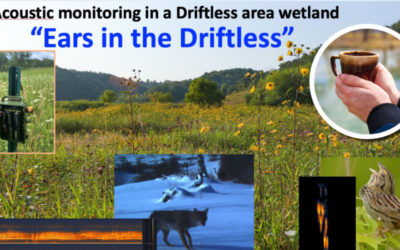
Wetland Coffee Break: Ears in the Driftless
Learn how landowners Mike and Marcie O’Connor are using this technique to document habitat changes over the course of restoring wetlands on their land.
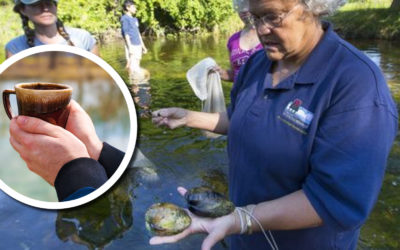
Wetland Coffee Break: Wisconsin’s amazing native mussels
Tune in for an introduction to the 50 species of native mussels in Wisconsin.
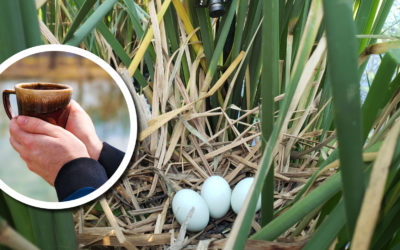
Wetland Coffee Break: How are water drawdowns affecting nest survival of marsh birds?
Hear about how nest cameras helped researchers to explore the impact of water drawdowns on predator access to and survival of marsh bird nests.
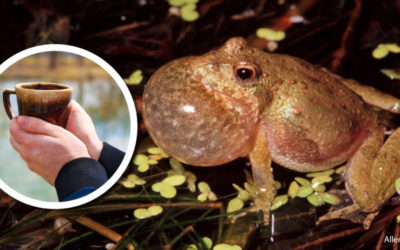
Wetland Coffee Break: Population status of Wisconsin’s endangered/threatened amphibians and reptiles
Join conservation biologist Rori Paloski to learn about the current population status of Wisconsin’s endangered and threatened wetland herptiles.