
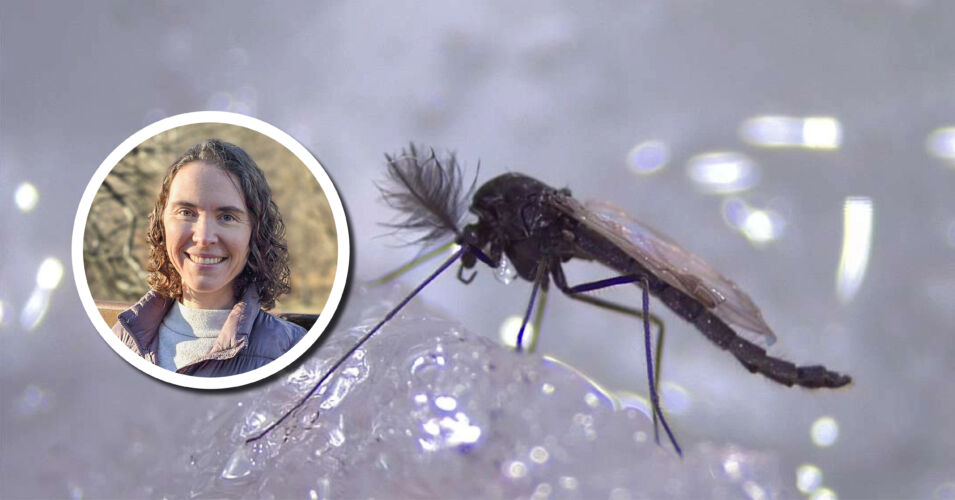
Some aquatic insects, including certain stoneflies, mayflies, caddisflies, and non-biting midges, complete their life cycles and emerge from water bodies as active adults only during the winter season. These winter-active species are often found walking on snow banks near spring-fed streams and are vitally important food sources for fish. This talk will discuss interesting life history strategies that help these insects to not only survive, but thrive during the coldest of seasons. Additionally, you’ll learn how you can volunteer to help with monitoring efforts that expand the scope of the Bugs Below Zero community science program.
Dr. Alyssa Anderson, Southwest Minnesota State University
Recorded February 13, 2026
Dr. Alyssa Anderson received her Ph.D. in Entomology from the University of Minnesota in 2012. She is an Associate Professor at Southwest Minnesota State University, teaching several ecology and zoology-themed courses. Anderson’s primary research interests revolve around learning about the life history dynamics of winter-active insects, especially Chironomidae, as well as the ecological importance of these organisms.
Links mentioned:
Related content
Wetlands in winter: Where’s the wildlife?
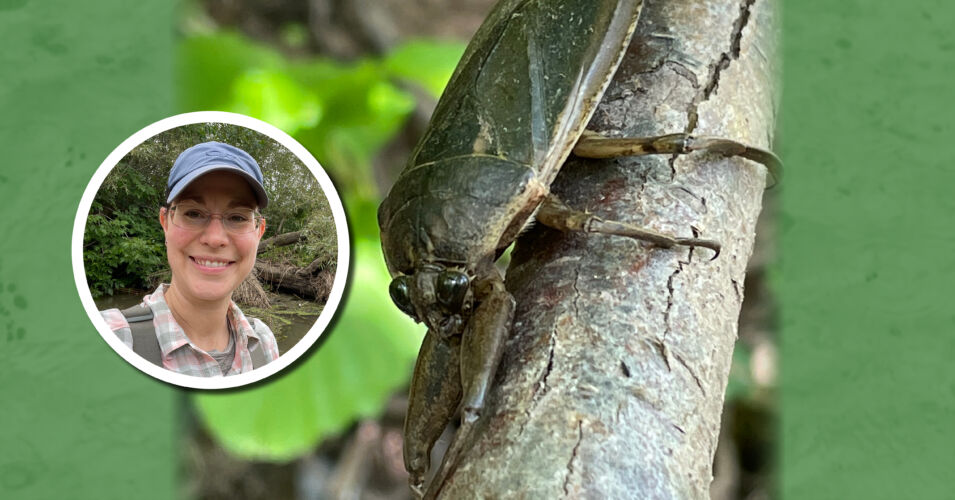
Wetland Coffee Break: On, in, and underwater: Life cycles and life history of wetland invertebrates