Wetland Coffee Break
The Wetland Coffee Break series helps keep our community of wetland lovers connected and learning about wetlands throughout the year, from anywhere! Bring your coffee and learn about wetlands, the plants and animals that call them home, and the many natural benefits they provide to our communities. Sessions are held on Zoom and feature time for audience Q&A.
See below for a list of upcoming presentations and to register. Once you register, you’ll receive an automatic email including the URL link and password you’ll need to access the meeting. We record and post each presentation so you can watch any that you missed live. You’ll find links to these recordings below, and you can also find them on our Facebook page.
We are grateful to all of the presenters for sharing their knowledge and expertise and to everyone interested in learning more about wetlands! If you are interested in giving a Wetland Coffee Break presentation, or if you have a wetland topic you’d like to see covered, please contact Katie.Beilfuss@wisconsinwetlands.org.
We are now able to provide attendance verification to Wetland Coffee Break audience members who attend the live sessions and request this service. We created this mechanism in response to requests from members of the Wetland Coffee Break audience who would like to apply their Wetland Coffee Break learning to their continuing education or certification requirements. Learn more about how to receive attendance verification here.
Register for a Wetland Coffee Break
Water is medicine: Caring for the Wetlands of the Sokaogon Chippewa Community
Tina L. Van Zile, Director, Environmental Department, Sokaogon Chippewa Community
Friday, May 1, 2026
10:30 am CT
Description
Since time immemorial, the Sokaogon Chippewa Community (SCC) has recognized the interconnections between lands, waters, and living beings, and they understand that what happens upstream affects everything downstream. This concept was physically embodied when they established a “traditional cultural district” in 2002. The district encompasses the headwaters of Swamp Creek and Rice Lake, a critical area for rice and other food and medicines. In 1995, the SCC also became the first tribe east of the Mississippi River to obtain Treatment as a State and develop water quality standards (as states do). While both the traditional cultural district and the water quality standards were codified to help the Tribe protect resources crucial to their cultural and traditional practices, they proved invaluable in the Tribe’s fight against the Crandon Mine. See the premiere of a new short video about this story and hear from Sokaogon Chippewa Community, Environmental Director, Tina L. Van Zile on this special edition of the Wetland Coffee Break.
Tina L. Van Zile is a tribal member of the Sokaogon, Mole Lake Band of the Lake Superior Chippewa Indians and is the Director of their Environmental Department. She is also the President of the Wisconsin Tribal Conservation Advisory Council (WTCAC).
Ganawenindiwag: Working with plant relatives to heal and protect Gichigami shorelines
Rob Croll (Great Lakes Indian Fish & Wildlife Commission) and Karina Heim (Lake Superior National Estuarine Research Reserve)
Friday, May 8, 2026
10:30 am CT
Description
Gichigami (Lake Superior) shorelines are under pressure from erosion, human development, and climate change. In this talk, Karina Heim and Rob Croll will introduce Ganawenindiwag: Working with Plant Relatives to Heal and Protect Gichigami Shorelines, a resource that encourages people to care for these shorelines by reimagining their relationships with plant beings that have long existed in this coastal landscape and that stabilize soils, provide habitats, support culture, and offer food and medicine for humans and wildlife. Local Lake Superior basin practitioners reading Ganawenindiwag (“they take care of each other” in Ojibwemowin) may find themselves thinking about plants in a different way as they encounter a cultural framing which affirms that plant beings are our elders, relatives, and teachers.
Rob Croll is the Climate Change Program Coordinator at the Great Lakes Indian Fish & Wildlife Commission. Rob and the GLIFWC Climate Change Team braid Ojibwe knowledge with western science for culturally driven and community supported climate adaptation and ecosystem resilience.
Karina Heim is the Coastal Training Program Coordinator at the Lake Superior National Estuarine Research Reserve. Her work is focused on developing learning opportunities that help local decision‑makers address persistent land and water challenges.
Impact of Great Lakes coastal wetland restoration on seasonal bird assemblages
Isabel Dunn, University of Minnesota Duluth
Friday, May 15, 2026
10:30 am CT
Description
The Great Lakes Restoration Initiative (GLRI) is the leading large-scale restoration program targeting the ecological health of the Laurentian Great Lakes; since 2010, 530,000 acres of coastal wetland and nearshore habitats, as well as other habitats, have been protected and restored. The impact of coastal wetland restoration on bird assemblages has not yet been widely assessed in the context of the GLRI. Using indexed breeding season survey data from the GLRI-funded Coastal Wetland Monitoring Program (2011-2025), we evaluate changes in avian assemblages at over 20 restoration sites spread throughout all five Great Lakes. Graduate student Isabel Dunn will share the results of this analysis, which explicitly tests hypotheses linking changes in bird taxonomic and functional diversity to coastal wetland habitat restoration activities in the context of factors such as change in wetland vegetation quality and extent of emergent vegetation.
Isabel Dunn is a current master’s degree student in the Water Resources Science program at University of Minnesota Duluth. Prior to graduate school, she was an Oak Ridge Institute for Science and Education research participant at the Environmental Protection Agency Great Lakes National Program Office. She graduated in 2021 from the University of Wisconsin-Stevens Point with a bachelor of science degree in water resources.
The Wetland Way: Special new exhibit at the Cable Natural History Museum
Heaven Walker, Cable Natural History Museum
Friday, May 29, 2026
10:30 am CT
Description
Tackling aquatic invasive species with surveys, drones, and soil cores in the Pheasant Branch Conservancy
Evelyn Web Williams, Adaptive Restoration LLC, and Tom Bernthal, retired WDNR
Friday, June 5, 2026
10:30 am CT
Description
Native wetland plant restoration pilot project: Fish Creek Slough Estuary in Ashland, Wisconsin
Kevin Brewster, Super Rivers Watershed Association
Friday, July 24, 2026
10:30 am CT
Description
Watch previous presentations
Click “Older Entries” below to see more past presentations, or view our Google Sheet index of past presentations here.
Wetland Coffee Break: Draft wetland functional assessment tool for Wisconsin and Minnesota
Hear Tom Pearce from Wisconsin DNR discuss the strategy and goals for developing the new RAM tool, provide an overview of current tool functions and scoring, and share an update on stakeholder engagement efforts.
Wetland Coffee Break: Helping farmers, saving cranes
International Crane Foundation’s Ryan Michalesko joined us to discuss how ICF is expanding its efforts to find real solutions to support farmers while also protecting cranes and the landscape.
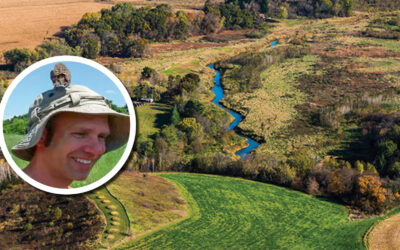
Wetland Coffee Break: New general permit to promote hydrologic restoration of streams, wetlands, and floodplains in Wisconsin
Hear from WWA’s Erin O’Brien and the WDNR’s Tom Nedland as they give a brief background and overview of the Hydrologic Restoration General Permit, which will encourage voluntary wetland, stream, and floodplain restoration and management projects.
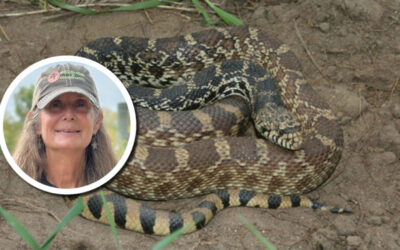
Wetland Coffee Break: An introduction to Wisconsin’s wetland-loving snakes
Get acquainted with the 8 species of snake in Wisconsin that spend time in wetlands for at least part of the year in this Wetland Coffee Break presentation from Rebecca Christoffel.
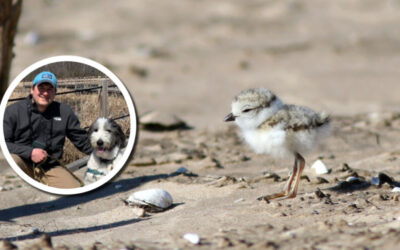
Wetland Coffee Break: Immediate avian response to restoration in Lower Green Bay
Learn how migrating and nesting birds are responding to wetland restoration projects in Lower Green Bay.
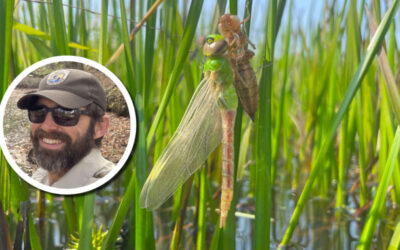
Wetland Coffee Break: Restoring the Little Yellow River watershed in central Wisconsin
Learn how this restoration project is aiming to help the community be more resilient to extreme weather events.