
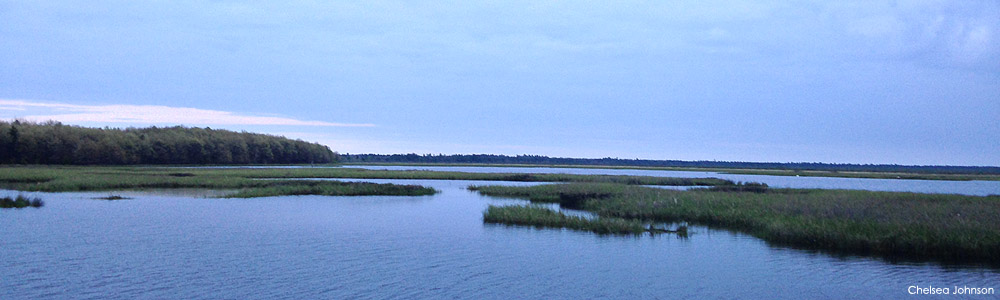
Marshes
Marshes and deep water wetlands have water depths between six inches and six feet. Some of these wetlands have standing water year-round, others for only part of the year. They support plant life both above and below the water surface. The shallowest marshes, seasonally-flooded basins, capture and fill up with snowmelt and rain in the spring and may be dry by late summer. In shallow marshes, water comes from surface water, groundwater, or both. Deep marshes may have high water levels much of the year. They are often found next to consistent sources of water like lakes and rivers.
How to recognize them
Marshes are what come to mind for most people when they think of a wetland. Cattails and open water are common, though bulrush, bur-reed, pondweed, and smartweed are often found in marshes too. Keep in mind that while some marshes may not have open water year-round, their soil is still saturated with water below the soil surface. These wetlands are often found in agricultural landscapes and next to rivers and lakes.
Plants and animals to look for
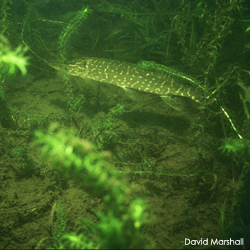
Northern pike
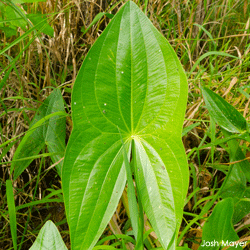
Arrowhead
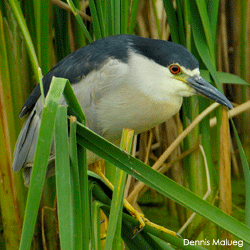
Black-crowned night heron
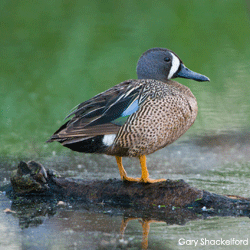
Blue-winged teal
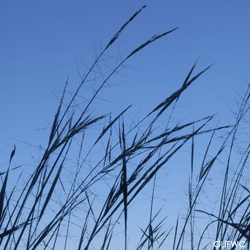
Wild rice
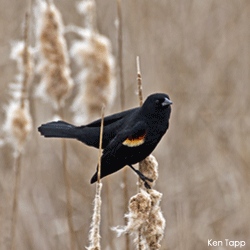
Red-winged blackbird