
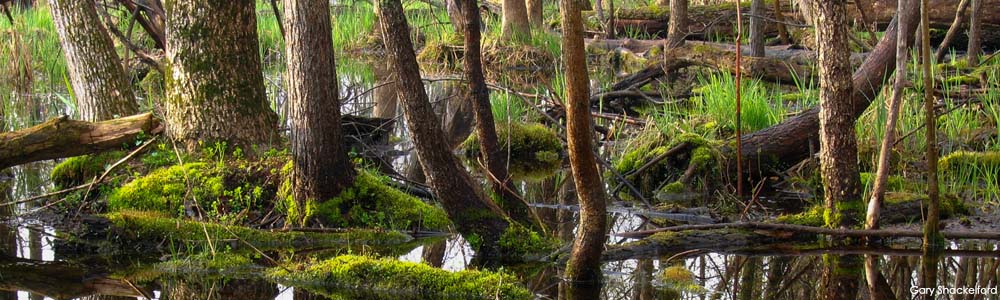
Forested wetlands
Forested wetlands, often referred to as swamps, are dominated by trees. Coniferous swamps, lowland hardwood swamps, and floodplain forests are all common types of forested wetlands. Floodplain forests are found next to rivers that seasonally rise. Coniferous swamps are mostly found in northern hardwood forests near ancient lake basins and river channels. Forested ephemeral ponds are usually small, shallow, poorly-drained basins within forests. While they are abundant particularly in northern Wisconsin, they often do not show up on wetland maps because early mapping techniques could not find them under the forest canopy. Ephemeral ponds are extremely important for both healthy watersheds and wildlife.
How to recognize them
These wetlands are characterized by the presence of trees. The soils are typically wet in spring and early summer, but may dry up later in the year. In some forested wetlands, the trees will have water stain marks that can be several feet up their trunks, and most will have shallow root systems.
Plants and animals to look for
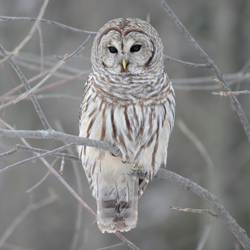
Barred owl
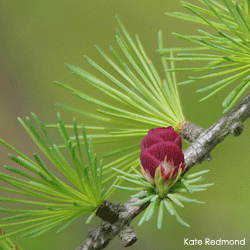
Tamarack
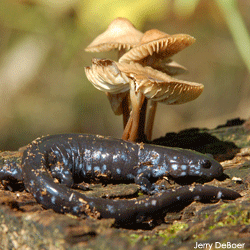
Spotted salamander
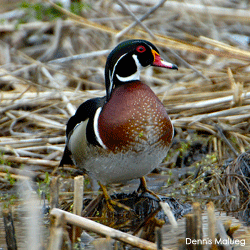
Wood duck
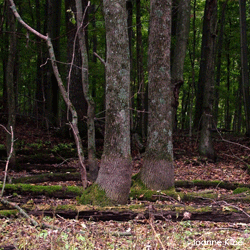
Water-stained tree trunks
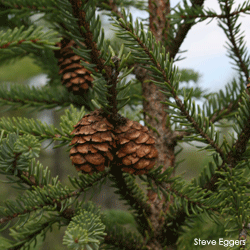
Black spruce