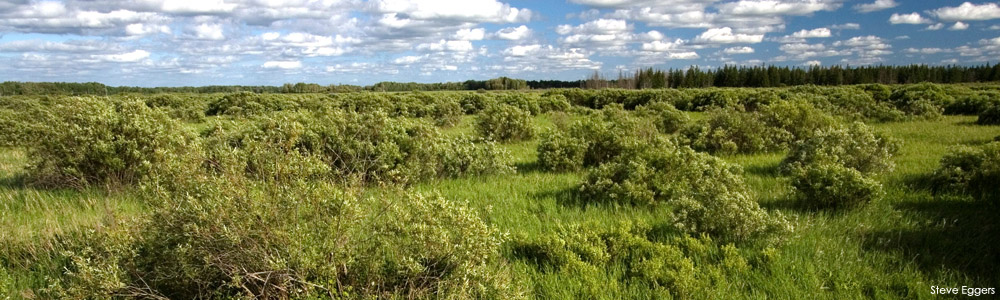
Shrub swamps are wetland plant communities dominated by woody vegetation less than 20 feet in height and with trunks of less than 6 inches in diameter at 1 meter height. Shrub swamps of Wisconsin are categorized as shrub-carrs and alder thickets depending on the dominant shrub species. Both occur on organic soils (peat/muck) as well as on the alluvial mineral soils of floodplains.

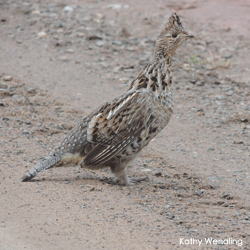
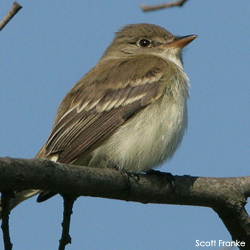
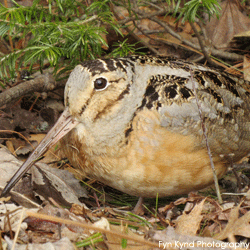
Shrub swamps provide high value habitat for many songbirds, ruffed grouse, American woodcock, and small mammals, and may be particularly important winter habitat for eastern cottontail and white-tailed deer.

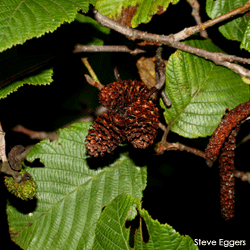
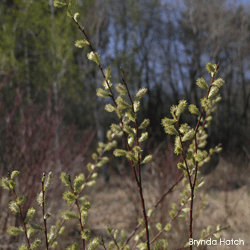
Alder thickets are a tall, deciduous shrub community similar to shrub-carrs except that speckled alder (Alnus rugosa) is the dominant shrub. Speckled alder can pioneer exposed peat or alluvial soils because of its tiny seeds and ability to fix nitrogen. Alder thickets are generally found in and north of the vegetation tension zone.

Speckled alder may occur as a monotype (be the only shrub species in a stand), but the alder thicket community can have a diversity of shrubs including high-bush cranberry (Viburnum trilobum), sweet gale (Myrica gale), and common winterberry holly (Ilex verticillata).

The groundlayer may include some of the ferns, sedges, grasses, and forbs of sedge meadows and fresh (wet) meadows. The diversity of species in the groundlayer is often dependent on degree of shrub canopy cover, degree of disturbance, and water source (e.g., groundwater versus surface runoff from urban or agricultural lands). Stands with 100 percent shrub canopy cover may have a depauperate groundlayer.

Alder thickets provide high quality habitat for ruffed grouse and American woodcock, as well as white-tailed deer. Rare, threatened, and endangered species can be supported by alder thickets. For example, alder thicket communities on the Lake Superior red clay plain of northwestern Wisconsin include state-listed threatened, endangered, or special concern species such as sweet coltsfoot (Petasites sagittatus), small yellow water crowfoot (Ranunculus gmelinii var hookeri) and New England violet (Viola novae-angliae).

The Wisconsin Natural Heritage Inventory recognizes alder thicket as a natural community type. Click here to read the Wisconsin Department of Natural Resources’ community descriptions for these community types.

The wetland plant community description in italics above is excerpted from Eggers, S.D. and D.M. Reed. 1997. Wetland Plants and Plant Communities of Minnesota and Wisconsin. (2nd Edition). U.S. Army Corps of Engineers, St. Paul, MN.

>> Back to top of this page