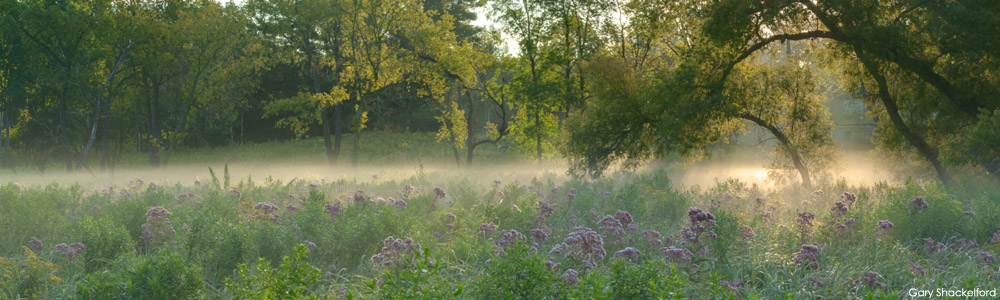
Meadows are essentially closed wetland communities (nearly 100 % vegetative cover) composed of perennial forb, grass, and sedge mixtures growing on saturated soils. Woody plants are not dominant, and standing water is usually only present during floods and snowmelt. Meadows often form a transition zone between aquatic communities and uplands. Peat/muck soils are frequently present, indicating permanent saturation and anaerobic conditions. Plants occurring in meadows include species found in other communities, such as the annuals of seasonally flooded basins, emergent aquatic plants of marshes, and invading shrubs or trees, which are present as scattered, small individuals. The forbs, grasses, and sedges of meadows can dolerate inundation to a greater degree than most woody species, but they suffer if inundation during the growing season lasts for more than one or two weeks. Because these wetlands lack standing water during most of the growing season, they are often called "dry marshes."

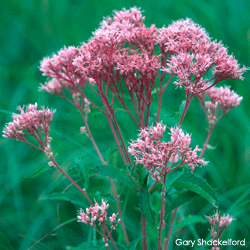
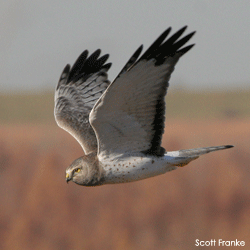
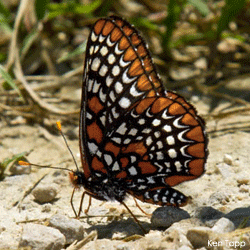
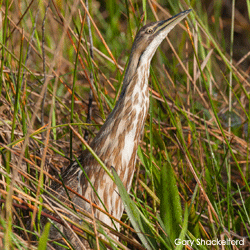
Meadows are particularly important for their water quality protection functions. These involve the trapping of sediments and assimilation of nutrients. Meadows are also important for stormwater and floodwater retention. Wildlife habitat is provided for many species including sandhill crane, ring-necked pheasant, common snipe, sedge wren, small mammals, and white-tailed deer. The abundance of small mammals supports mink, fox, and raptors such as the northern harrier. The composites (e.g. sunflowers and asters) found in these meadows are an important fall and winter food source for songbirds. Meadows are often used for pasture or cut for "marsh hay".

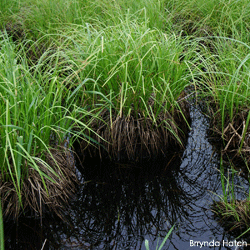
Sedge meadows are dominated by the sedges (Cyperaceae) growing on saturated soils. Most of the sedges present are in the genus Carex, but also present are those of Eleocharis (spike rushes), Scirpus (bulrushes), and Cyperus (nut-grasses). Grasses (Graminae), especially Canada bluejoint grass, and true rushes (Juncus), may also be present. The forb species are diverse but scattered, and may flower poorly under intense competition with the sedges.

Soils are usually composed of peat or muck. Some sedges, especially the hummock sedge, form hummocks - also called tussocks - that may be accentuated by grazing and frost action. Hummocks are composed of undecayed fibrous roots and rhizomes. Sedge meadows often grade into shallow marshes, calcareous fens, wet prairies, and bogs. Occasional fires stimulate spring growth of the sedges while setting back invading woody vegetation.

The sedges of the genus Carex are mostly long-lived and competitive grass-like plants that have three-ranked leaves and triangular, solid stems. More than 150 species of Carex are found in Minnesota and Wisconsin, many of which are found in wetland habitats. Because they have specific habitat requirements, Carex species are good indicators of environmental conditions such as soil and water chemistry, water levels, shading, silt deposition, and floating mats.

The fertile organic soils associated have traditionally been used for muck farming. The lowering of water tables through artificial drainage is suspected of causing shrub invasion in some of the remaining sedge meadows.

The Wisconsin Natural Heritage Inventory divides this community type into two separate community types: northern sedge meadow, and southern sedge meadow. Click here to read the Wisconsin Department of Natural Resources’ community descriptions for these community types.

The wetland plant community description in italics above is excerpted from Eggers, S.D. and D.M. Reed. 1997. Wetland Plants and Plant Communities of Minnesota and Wisconsin. (2nd Edition). U.S. Army Corps of Engineers, St. Paul, MN.

>> Back to top of this page