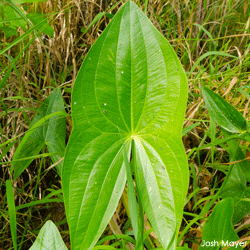
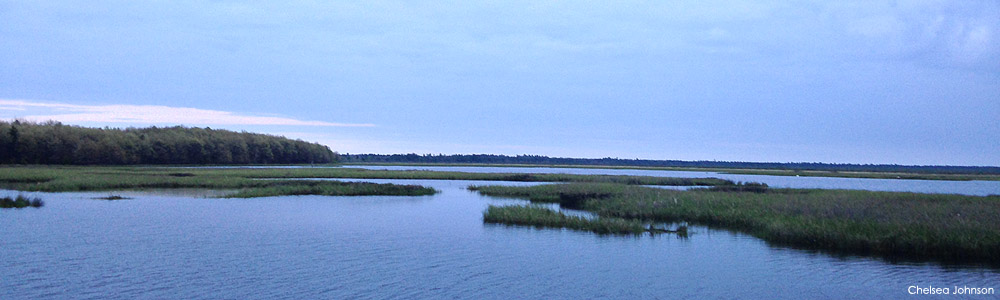
| Marshes are characterized by emergent aquatic plants growing in permanent to seasonal shallow water. Species found in sedge meadows and seasonally flooded basins occur in marshes. Species of sedge meadows and seasonally flooded basins colonize muskrat lodges, floating mats, and muck soils exposed during droughts or artificial drawdowns. Emergent aquatic plants typically become established and spread when water levels are low or when marsh substrate is exposed, and then persist when water levels rise. However, if water levels rise too quickly, or rise to levels higher than normal, emergent vegetation may not survive, or may rise to the water surface as floating mats. Muskrats can consume significant amounts of emergent vegetation, creating open water areas within the marsh that favor waterfowl use. Unchecked, however, muskrats can eliminate emergent vegetation, leaving an open water are until the next drought or drawdown allows emergent vegetation to recover.
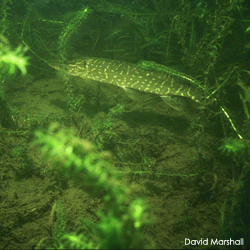
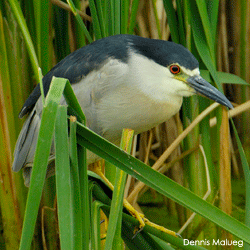
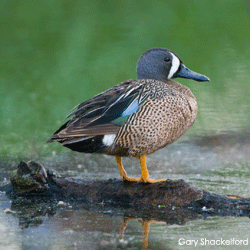
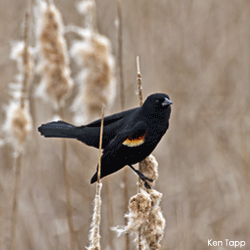
Marshes are among the most productive of all wetlands for water birds and furbearers, and they can also provide spawning and nursery habitat for some fish species. Birds that use marshes for breeding and feeding include ducks, geese, rails, herons, egrets, terns and songbirds. Raptors such as the osprey, bald eagle, and northern harrier frequent marshes in search of prey. Important furbearers inhabiting marshes include muskrat and mink. Excellent winter habitat can be provided for upland wildlife, including eastern cottontail. Marshes can help replenish fish populations in adjacent lakes and rivers by providing spawning habitat, most notably for northern pike and muskellunge.
In addition to providing fish and wildlife habitat, marshes have other functions including floodwater retention, protection of shorelines from erosion, aesthetics, and water quality functions involving the trapping of sediments and assimilation of nutrients.
Included in the marsh community type are shallow, open water plant communities with water depths of less than 6.6 feet (2 meters). Submergent, floating and floating-leaved aquatic vegetation including pondweeds, water-lilies, water milfoil, coontail, and duckweeds characterize this wetland type. Size can vary from a one-quarter acre pond to a long oxbow of a river or shallow bay of a lake. Floating vegetation may or may not be present depending upon the effects of the season, wind, availability of nutrients, and aquatic weed control efforts.
Shallow open water communities provide important habitat for waterfowl, terns, furbearers, fish, frogs, turtles, and aquatic invertebrates. For example, the submergent plants and aquatic invertebrates provide food for waterfowl, which is especially important during migration. The permanent to semi-permanent water regime of these deep-water wetlands results in their being especially important for waterfowl production in drought years when other wetlands have become dry. Also provided is habitat for spawning beds and nursery areas for both game and nongame fish. Finally, these areas of open water provide a valuable aesthetic resource important to municipalities and landowners.
The Wisconsin Natural Heritage Inventory divides this community type into five separate community types: emergent aquatic, emergent aquatic - wild rice, submergent aquatic, submergent aquatic - oligotrophic marsh, and coastal plain marsh. Click here to read the Wisconsin Department of Natural Resources’ community descriptions for these community types.
The wetland plant community description in italics above is excerpted from Eggers, S.D. and D.M. Reed. 1997. Wetland Plants and Plant Communities of Minnesota and Wisconsin. (2nd Edition). U.S. Army Corps of Engineers, St. Paul, MN.
|